Hanzi Writer

How to Write 欷 (xī) — Meaning “To sob”

11 strokes Radical: 欠

欷 (xī) means "To sob" in Chinese. It has 11 strokes with the radical 欠.

Rated 4.2/5 in difficulty (advanced).

Appears in 3+ common words including 欷歔 (xī xū), 嘘欷 (xū xī), 欷 (xī).

Due to its 11 strokes, Hanzi Writer's error detection shows 欷 requires focused practice — most learners need 10+ attempts for consistent accuracy.
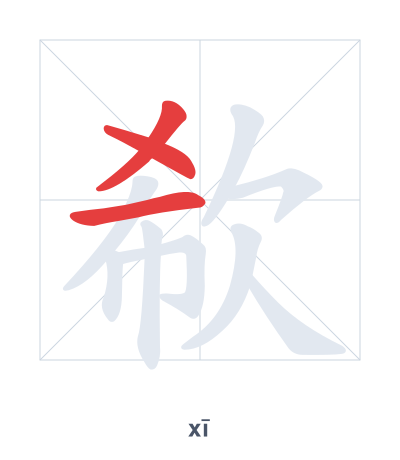
Stroke order practice for 欷 - xī

Practice Writing 欷 (xī)

Open Hanzi Writer to see the animated stroke order and practice writing 欷 with real-time feedback.

The character (xī) is written with 11 strokes. Follow the standard Chinese stroke order: top to bottom, left to right, outside before inside. The radical is one of its key components.

Practice the correct stroke order with the Hanzi Writer app to see animated stroke-by-stroke guidance with real-time feedback.

means To sob.

Character
Pinyinxī (xi)
MeaningTo sob
Strokes11
Radical
Difficulty4.2/5

欷 is a compound character with the radical 欠 (a person yawning or breathing out) as the semantic component, indicating the action of sobbing relates to breath. The upper component 希 (xī, meaning 'rare' or 'few') serves as a phonetic hint for the pronunciation. Together, the character depicts the sound of drawn, irregular breaths during a sob.

💡 Memory Tip: Imagine a rare (希) sigh or breath (欠) that turns into a sob—like trying to hold back tears but letting out a shaky, rare exhale.

xī xū
To sob or sigh
xū xī
To sob / To sigh
To sob

令人欷歔不已。

lìng rén xī xū bù yǐ

It makes one sob or sigh incessantly.

他在暗自嘘欷。

tā zài àn zì xū xī

He is sighing secretly.

他欷了一口气。

tā xī le yì kǒu qì

He let out a sigh.

Character Pinyin Strokes Radical
(current) 11
jué 10
11
shuò 11
Stroke order practice for 欷 - xī

Practice Writing 欷 (xī)

Open Hanzi Writer to see the animated stroke order and practice writing 欷 with real-time feedback.

✨ Animated stroke order · Handwriting recognition · HSK-graded practice · Free to use

Frequently Asked Questions about 欷

The character 欷 consists of two parts: the left side 希 (xī, meaning 'rare' but functioning phonetically) and the right side 欠 (qiàn, meaning 'to yawn' or 'to breathe out'). The radical 欠 relates to breath or sound from the mouth, so together they suggest a breathy sound of sobbing.

Characters with Radical 欠

Other 11-Stroke Characters