Hanzi Writer

How to Write 欧 (ōu) — Meaning “Europe”

ōu 8 strokes Radical: 欠

欧 (ōu) means "Europe" in Chinese. It has 8 strokes with the radical 欠.

Rated 3.7/5 in difficulty (challenging).

Appears in 3+ common words including 欧洲 (ōu zhōu), 欧元 (ōu yuán), 欧式 (ōu shì).

Due to its 8 strokes, Hanzi Writer's error detection shows 欧 requires focused practice — most learners need 10+ attempts for consistent accuracy.
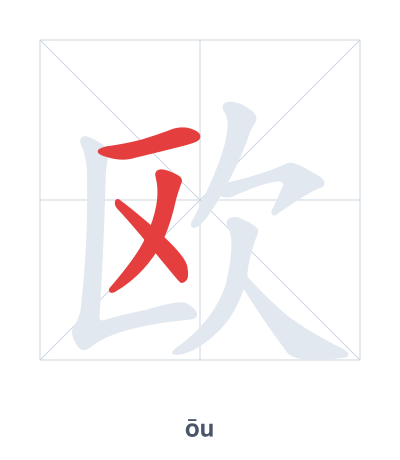
Stroke order practice for 欧 - ōu

Practice Writing 欧 (ōu)

Open Hanzi Writer to see the animated stroke order and practice writing 欧 with real-time feedback.

The character (ōu) is written with 8 strokes. Follow the standard Chinese stroke order: top to bottom, left to right, outside before inside. The radical is one of its key components.

Practice the correct stroke order with the Hanzi Writer app to see animated stroke-by-stroke guidance with real-time feedback.

means Europe.

Character
Pinyinōu (ou)
MeaningEurope
Strokes8
Radical
Difficulty3.7/5

欧 is a compound character. The left part 区 (area) suggests a region, and the right part 欠 (yawn) implies a distant, vast place, together representing the continent Europe. Originally, 欧 was a phonetic loan character; its earlier meaning related to coughing, but it was later borrowed to represent the sound 'Ōu' in the name Europe.

💡 Memory Tip: Picture a person yawning (欠) while looking at a map of the area (区) labeled 'Europe'.

ōu zhōu
Europe
ōu yuán
Euro
ōu shì
European style

他去年去了欧洲。

tā qù nián qù le ōu zhōu

He went to Europe last year.

我需要换一些欧元。

wǒ xū yào huàn yī xiē ōu yuán

I need to exchange some Euros.

这是一个欧式建筑。

zhè shì yí gè ōu shì jiàn zhù

This is a European-style building.

Character Pinyin Strokes Radical
(current) ōu 8
6
huān 6
xīn 8
Stroke order practice for 欧 - ōu

Practice Writing 欧 (ōu)

Open Hanzi Writer to see the animated stroke order and practice writing 欧 with real-time feedback.

✨ Animated stroke order · Handwriting recognition · HSK-graded practice · Free to use

Frequently Asked Questions about 欧

欧 is made of two parts: the left side 区 (qū, meaning 'area') and the right side 欠 (qiàn, meaning 'to owe'). However, the meaning 'Europe' comes from the sound of the whole character, not from these components directly. The right side 欠 is also the radical, which gives a clue about pronunciation in some characters.

Characters with Radical 欠

Other 8-Stroke Characters