Hanzi Writer

How to Write 尾 (wěi)

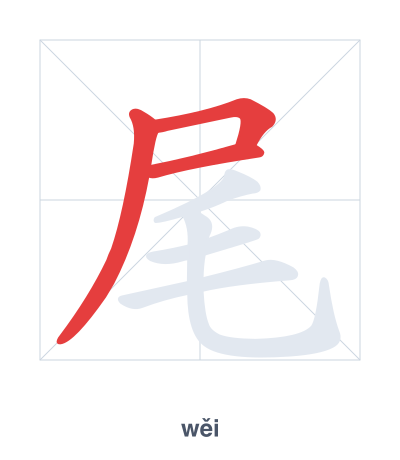
尾 (wěi) means "tail; end" in Chinese. It has 7 strokes with the radical 尸, and is HSK Level 4. Difficulty: 3.5/5.

wěi
HSK Level 4 7 strokes Radical: 尸 Difficulty: 3.5/5

tail; end

How to Write 尾

The character (wěi) is written with 7 strokes. Follow the standard Chinese stroke order: top to bottom, left to right, outside before inside. The radical is one of its key components.

Practice the correct stroke order with the Hanzi Writer app to see animated stroke-by-stroke guidance with real-time feedback.

Meaning & Pronunciation

is pronounced wěi in Mandarin Chinese. It means tail; end.

As an HSK Level 4 character, is an intermediate-level character.

Common Words with 尾

尾巴 wěi ba
tail
结尾 jié wěi
Ending or conclusion.
年尾 nián wěi
End of the year

Example Sentences

小狗有长尾巴。

xiǎo gǒu yǒu zhǎng wěi ba

The puppy has a long tail.

故事的结尾很好。

gù shì de jié wěi hěn hǎo

The ending of the story is very good.

我们年尾去旅行。

wǒ men nián wěi qù lǚ xíng

We are going on a trip at the end of the year.

Similar Characters

kāo
jǐn
Stroke order practice for 尾 - wěi

Practice Writing 尾 (wěi)

Open Hanzi Writer to see the animated stroke order and practice writing 尾 with real-time feedback.

Frequently Asked Questions about 尾

Related Characters