糗 (qiǔ) means "Embarrassing" in Chinese. It has 16 strokes with the radical 米.
Rated 4.2/5 in difficulty (advanced).
Appears in 3+ common words including 糗事 (qiǔ shì), 出糗 (chū qiǔ), 太糗了 (tài qiǔ le).
Due to its 16 strokes, Hanzi Writer's error detection shows 糗 requires focused practice — most learners need 10+ attempts for consistent accuracy.
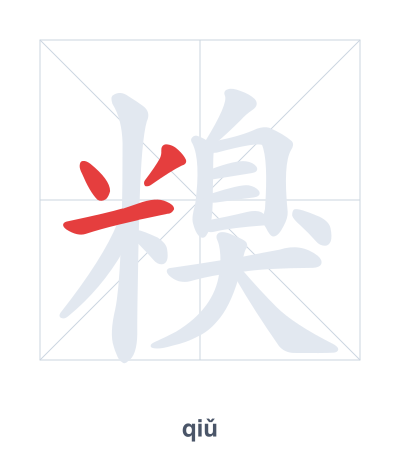
Open Hanzi Writer to see the animated stroke order and practice writing 糗 with real-time feedback.
The character 糗 (qiǔ) is written with 16 strokes. Follow the standard Chinese stroke order: top to bottom, left to right, outside before inside. The radical 米 is one of its key components.
Practice the correct stroke order with the Hanzi Writer app to see animated stroke-by-stroke guidance with real-time feedback.
糗 means Embarrassing.
糗 combines 米 (rice) with 臭 (stinky), literally meaning 'spoiled rice.' This originally referred to dried provisions but evolved to describe an awkward or embarrassing situation, as spoiled rice is shameful to serve.
💡 Memory Tip: Picture yourself accidentally dropping a bowl of rice (米) that makes a stinky mess (臭) right in front of your crush—how embarrassing!
别说我的糗事。
bié shuō wǒ de qiǔ shì
Don't talk about my embarrassing moments.
他在台上出糗了。
tā zài tái shàng chū qiǔ le
He made a fool of himself on stage.
这件事太糗了。
zhè jiàn shì tài qiǔ le
This matter is so embarrassing.
Open Hanzi Writer to see the animated stroke order and practice writing 糗 with real-time feedback.
✨ Animated stroke order · Handwriting recognition · HSK-graded practice · Free to use
The character 糗 is made of two parts: the radical 米 (rice) on the left and 臭 (chòu, smell) on the right. The combination suggests the idea of rice that has gone bad or spoiled, which can lead to an embarrassing situation — like being caught with rotten food.