Hanzi Writer

How to Write 诳 (kuáng)

诳 (kuáng) means "to deceive" in Chinese. It has 9 strokes with the radical 讠. Difficulty: 3.7/5.

kuáng
9 strokes Radical: 讠 Difficulty: 3.7/5

to deceive

How to Write 诳

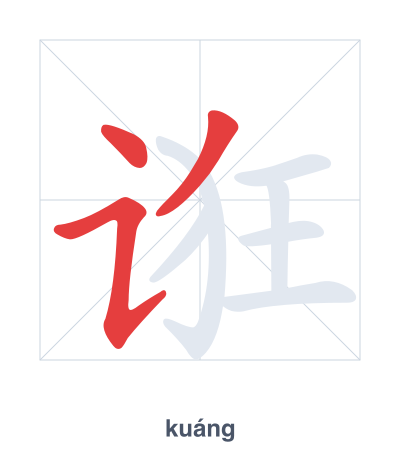
The character (kuáng) is written with 9 strokes. Follow the standard Chinese stroke order: top to bottom, left to right, outside before inside. The radical is one of its key components.

Practice the correct stroke order with the Hanzi Writer app to see animated stroke-by-stroke guidance with real-time feedback.

Meaning & Pronunciation

is pronounced kuáng in Mandarin Chinese. It means to deceive.

Common Words with 诳

诳语 kuáng yǔ
lies or deceitful talk
说诳 shuō kuáng
to tell a lie
欺诳 qī kuáng
to deceive; to delude

Example Sentences

出家人不打诳语。

chū jiā rén bù dǎ kuáng yǔ

Monks do not tell lies.

小孩子不能说诳。

xiǎo hái zi bù néng shuō kuáng

Children should not tell lies.

这种欺诳行为很不好。

zhè zhǒng qī kuáng xíng wéi hěn bù hǎo

This kind of deceitful behavior is very bad.

Similar Characters

zhèng
Stroke order practice for 诳 - kuáng

Practice Writing 诳 (kuáng)

Open Hanzi Writer to see the animated stroke order and practice writing 诳 with real-time feedback.

Frequently Asked Questions about 诳

Related Characters