Hanzi Writer

How to Write 箜 (kōng)

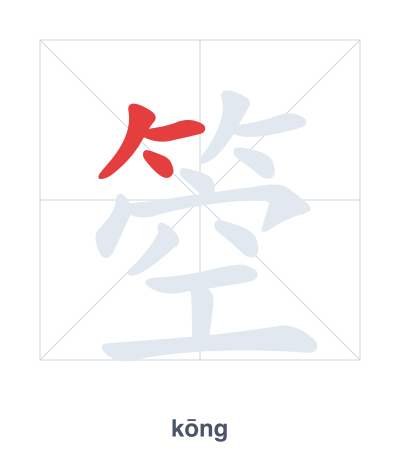
箜 (kōng) means "ancient harp (used in konghou)" in Chinese. It has 14 strokes with the radical 竹. Difficulty: 4.2/5.

kōng
14 strokes Radical: 竹 Difficulty: 4.2/5

ancient harp (used in konghou)

How to Write 箜

The character (kōng) is written with 14 strokes. Follow the standard Chinese stroke order: top to bottom, left to right, outside before inside. The radical is one of its key components.

Practice the correct stroke order with the Hanzi Writer app to see animated stroke-by-stroke guidance with real-time feedback.

Meaning & Pronunciation

is pronounced kōng in Mandarin Chinese. It means ancient harp (used in konghou).

Common Words with 箜

箜篌 kōng hóu
konghou (an ancient Chinese harp)
弹箜篌 dàn kōng hóu
To play the konghou (ancient harp)
箜篌引 kōng hóu yǐn
Song of the Konghou (ancient poem/melody)

Example Sentences

箜篌是中国古代乐器。

kōng hóu shì zhōng guó gǔ dài yuè qì

The konghou is an ancient Chinese musical instrument.

她正在台上弹箜篌。

tā zhèng zài tái shàng dàn kōng hóu

She is playing the konghou (ancient harp) on stage.

这首曲子叫箜篌引。

zhè shǒu qǔ zi jiào kōng hóu yǐn

This piece of music is called 'Konghou Yin'.

Similar Characters

guì
xiǎn
xiáo
Stroke order practice for 箜 - kōng

Practice Writing 箜 (kōng)

Open Hanzi Writer to see the animated stroke order and practice writing 箜 with real-time feedback.

Frequently Asked Questions about 箜

Related Characters