Hanzi Writer

How to Write 薅 (hāo)

薅 (hāo) means "to pull up (weeds); to pull out (hair)" in Chinese. It has 16 strokes with the radical 艹. Difficulty: 4.2/5.

hāo
16 strokes Radical: 艹 Difficulty: 4.2/5

to pull up (weeds); to pull out (hair)

How to Write 薅

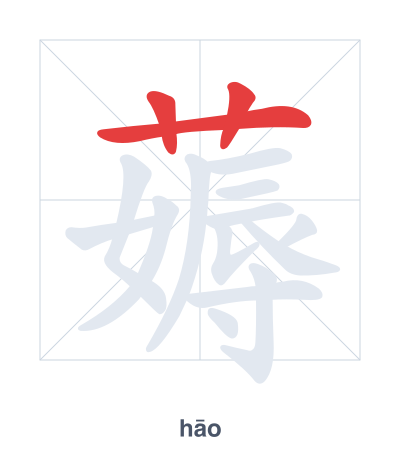
The character (hāo) is written with 16 strokes. Follow the standard Chinese stroke order: top to bottom, left to right, outside before inside. The radical is one of its key components.

Practice the correct stroke order with the Hanzi Writer app to see animated stroke-by-stroke guidance with real-time feedback.

Meaning & Pronunciation

is pronounced hāo in Mandarin Chinese. It means to pull up (weeds); to pull out (hair).

Common Words with 薅

薅草 hāo cǎo
to weed; to pull up weeds
薅羊毛 hāo yáng máo
to take advantage of a deal; to get a bargain
薅头发 hāo tóu fà
to pull one's hair

Example Sentences

爷爷在院子里薅草。

yé yé zài yuàn zi lǐ hāo cǎo

Grandpa is weeding in the yard.

大家都喜欢薅羊毛。

dà jiā dōu xǐ huān hāo yáng máo

Everyone likes to hunt for bargains.

别薅他的头发。

bié hāo tā de tóu fà

Don't pull his hair.

Similar Characters

ruò
míng
Stroke order practice for 薅 - hāo

Practice Writing 薅 (hāo)

Open Hanzi Writer to see the animated stroke order and practice writing 薅 with real-time feedback.

Frequently Asked Questions about 薅

Related Characters