呱 (gū/guā) means "quack / sound of a frog or duck" in Chinese. It has 8 strokes with the radical 口.
Rated 3.7/5 in difficulty (challenging).
Appears in 3+ common words including 呱呱叫 (guā guā jiào), 呱呱坠地 (gū gū zhuì dì), 拉呱 (lā gū).
Due to its 8 strokes, Hanzi Writer's error detection shows 呱 requires focused practice — most learners need 10+ attempts for consistent accuracy.
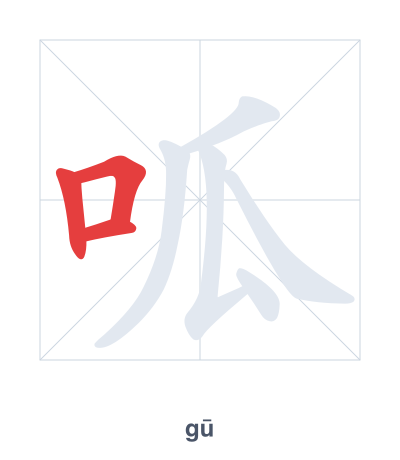
Open Hanzi Writer to see the animated stroke order and practice writing 呱 with real-time feedback.
The character 呱 (gū/guā) is written with 8 strokes. Follow the standard Chinese stroke order: top to bottom, left to right, outside before inside. The radical 口 is one of its key components.
Practice the correct stroke order with the Hanzi Writer app to see animated stroke-by-stroke guidance with real-time feedback.
呱 means quack / sound of a frog or duck.
This is a polyphonic character with readings: gū, guā.
呱 is a phono-semantic compound: the radical 口 (mouth) indicates that the character relates to sound, while 瓜 (melon, pronounced gū) provides the phonetic component. Together, they represent the sound made by a duck or frog.
💡 Memory Tip: Picture a frog (口 as its mouth) sitting on a round melon (瓜), letting out a loud 'GUA!' quack.
他的英语口语水平非常棒,说得真是呱呱叫。
tā de yīng yǔ kǒu yǔ shuǐ píng fēi cháng bàng shuō dé zhēn shì guā guā jiào
His spoken English is excellent; he speaks it brilliantly.
随着一声啼哭,一个新的生命呱呱坠地了。
suí zhe yī shēng tí kū yí gè xīn de shēng mìng gū gū zhuì dì le
With a cry, a new life was born into the world.
乡亲们闲暇时喜欢聚在一起拉呱聊天。
xiāng qīn men xián xiá shí xǐ huān jù zài yì qǐ lā gū liáo tiān
Villagers like to gather and chat in their spare time.
Open Hanzi Writer to see the animated stroke order and practice writing 呱 with real-time feedback.
✨ Animated stroke order · Handwriting recognition · HSK-graded practice · Free to use
呱 is made of the radical 口 (mouth) on the left, which indicates that the character relates to sounds, and the component 瓜 (melon) on the right gives the pronunciation. Together, 口 + 瓜 creates a character that imitates the "guā" or "gū" sound a frog or duck makes.