Hanzi Writer

How to Write 跗 (fū) — Meaning “tarsus; instep”

12 strokes Radical: 足

跗 (fū) means "tarsus; instep" in Chinese. It has 12 strokes with the radical 足.

Rated 4.2/5 in difficulty (advanced).

Appears in 3+ common words including 跗骨 (fū gǔ), 跗面 (fū miàn), 跗部 (fū bù).

Due to its 12 strokes, Hanzi Writer's error detection shows 跗 requires focused practice — most learners need 10+ attempts for consistent accuracy.
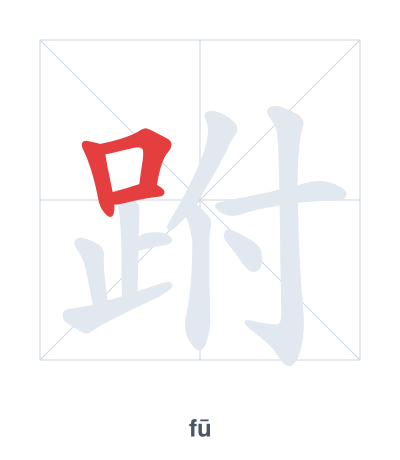
Stroke order practice for 跗 - fū

Practice Writing 跗 (fū)

Open Hanzi Writer to see the animated stroke order and practice writing 跗 with real-time feedback.

The character (fū) is written with 12 strokes. Follow the standard Chinese stroke order: top to bottom, left to right, outside before inside. The radical is one of its key components.

Practice the correct stroke order with the Hanzi Writer app to see animated stroke-by-stroke guidance with real-time feedback.

means tarsus; instep.

Character
Pinyinfū (fu)
Meaningtarsus; instep
Strokes12
Radical
Difficulty4.2/5

This character is a phono-semantic compound. The radical 足 (foot) indicates it relates to the foot, while 付 (fù) provides the pronunciation and also hints at the idea of 'attaching' — the instep is where the foot bones attach to the leg.

💡 Memory Tip: Imagine a foot (足) with a small man (亻) giving a high-five (寸) on your instep — that's the top part you remember as 跗.

fū gǔ
tarsal bone
fū miàn
dorsal surface of the foot
fū bù
tarsal region

跗骨位于脚踝处。

fū gǔ wèi yú jiǎo huái chù

The tarsal bones are located at the ankle.

他的跗面有些红肿。

tā de fū miàn yǒu xiē hóng zhǒng

The top of his foot is a bit red and swollen.

医生按压他的跗部。

yī shēng àn yā tā de fū bù

The doctor pressed his tarsus.

Character Pinyin Strokes Radical
(current) 12
bào 10
dǔn 10
11
Stroke order practice for 跗 - fū

Practice Writing 跗 (fū)

Open Hanzi Writer to see the animated stroke order and practice writing 跗 with real-time feedback.

✨ Animated stroke order · Handwriting recognition · HSK-graded practice · Free to use

Frequently Asked Questions about 跗

跗 consists of the radical 足 (foot) on the left and the phonetic component 付 (fù) on the right. The radical tells you the character is related to the foot, and the phonetic gives a hint to its pronunciation fū. Together, they create a character meaning 'tarsus' or 'instep,' which is a part of the foot.

Characters with Radical 足

Other 12-Stroke Characters