垩 (è) means "white earth; chalk" in Chinese. It has 9 strokes with the radical 土.
Rated 4/5 in difficulty (challenging).
Appears in 3+ common words including 白垩 (bái è), 垩土 (è tǔ), 白垩纪 (bái è jì).
Due to its 9 strokes, Hanzi Writer's error detection shows 垩 requires focused practice — most learners need 10+ attempts for consistent accuracy.
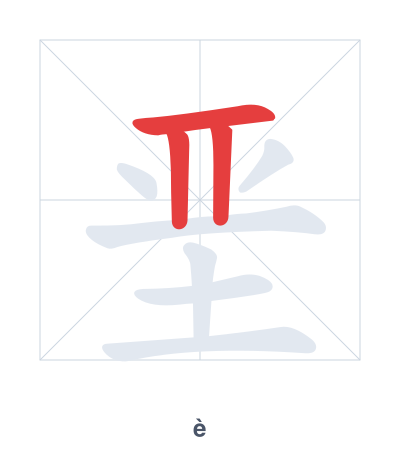
Open Hanzi Writer to see the animated stroke order and practice writing 垩 with real-time feedback.
The character 垩 (è) is written with 9 strokes. Follow the standard Chinese stroke order: top to bottom, left to right, outside before inside. The radical 土 is one of its key components.
Practice the correct stroke order with the Hanzi Writer app to see animated stroke-by-stroke guidance with real-time feedback.
垩 means white earth; chalk.
垩 is a compound character. The radical 土 (earth) indicates the material, while the component 亚 (yà, meaning 'inferior' but purely phonetic here) supplies the sound è. Together they depict white earth or chalk, a soft, light-colored sedimentary soil used for writing and whitewashing.
💡 Memory Tip: Picture a piece of chalk shaped like an '亚' resting on a pile of dirt (土) — that's white earth ready to write.
墙上涂了白垩。
qiáng shàng tú le bái è
The wall is coated with chalk.
这种垩土很白。
zhè zhǒng è tǔ hěn bái
This chalky soil is very white.
恐龙生活在白垩纪。
kǒng lóng shēng huó zài bái è jì
Dinosaurs lived in the Cretaceous period.
Open Hanzi Writer to see the animated stroke order and practice writing 垩 with real-time feedback.
✨ Animated stroke order · Handwriting recognition · HSK-graded practice · Free to use
The character 垩 consists of the radical 土 (earth) on top and 亚 (yà) below. The 土 radical indicates that the meaning relates to soil or earth, and the bottom part 亚 gives a clue to the pronunciation. Together, they form the meaning "white earth" or "chalk."