Hanzi Writer

How to Write 嘀 (dī/dí) — Meaning “Beep; tick; drip.”

/ 14 strokes Radical: 口

嘀 (dī/dí) means "Beep; tick; drip." in Chinese. It has 14 strokes with the radical 口.

Rated 4.2/5 in difficulty (advanced).

Appears in 3+ common words including 嘀咕 (dí gū), 嘀嗒 (dī dā), 嘀的一声 (dí de yī shēng).

Due to its 14 strokes, Hanzi Writer's error detection shows 嘀 requires focused practice — most learners need 10+ attempts for consistent accuracy.
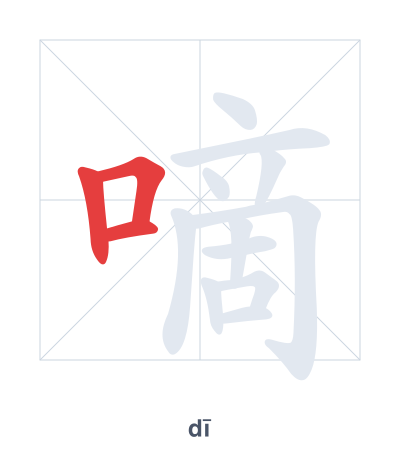
Stroke order practice for 嘀 - dī/dí

Practice Writing 嘀 (dī/dí)

Open Hanzi Writer to see the animated stroke order and practice writing 嘀 with real-time feedback.

The character (dī/dí) is written with 14 strokes. Follow the standard Chinese stroke order: top to bottom, left to right, outside before inside. The radical is one of its key components.

Practice the correct stroke order with the Hanzi Writer app to see animated stroke-by-stroke guidance with real-time feedback.

means Beep; tick; drip..

This is a polyphonic character with readings: dī, dí.

Character
Pinyindī / dí (di)
MeaningBeep; tick; drip.
Strokes14
Radical
Difficulty4.2/5

嘀 is a phono-semantic compound character. The radical 口 (mouth) indicates a sound or utterance, while the phonetic component 啇 (dí) provides the pronunciation. Together, they depict a short, sharp sound like a drip, tick, or beep.

💡 Memory Tip: Imagine a mouth (口) saying 'drip' as a single drop (the right side resembling a drop with a stem) falls from a leaky faucet.

dí gū
To whisper; to mutter to oneself.
dī dā
Tick-tock; drip-drop.
dí de yī shēng
With a beep.

你们在小声嘀咕什么?

nǐ men zài xiǎo shēng dí gū shén me

What are you whispering about?

雨水嘀嗒嘀嗒地下。

yǔ shuǐ dī dā dī dā dì xià

The rain is dripping down.

闹钟嘀的一声响了。

nào zhōng dí de yī shēng xiǎng le

The alarm clock beeped.

Character Pinyin Strokes Radical
(current) dī / dí 14
14
chì 12
12
Stroke order practice for 嘀 - dī/dí

Practice Writing 嘀 (dī/dí)

Open Hanzi Writer to see the animated stroke order and practice writing 嘀 with real-time feedback.

✨ Animated stroke order · Handwriting recognition · HSK-graded practice · Free to use

Frequently Asked Questions about 嘀

嘀 is composed of the radical 口 (mouth) on the left and the phonetic component 啇 on the right. The 口 indicates that the character relates to sounds made by the mouth, while 啇 provides the pronunciation dī. Together they form an onomatopoeic character used for sounds like beeps, ticks, and drips.

Characters with Radical 口

Other 14-Stroke Characters