逋 (bū) means "To flee / To owe" in Chinese. It has 10 strokes with the radical 辶.
Rated 4.2/5 in difficulty (advanced).
Appears in 3+ common words including 逋欠 (bū qiàn), 逋逃 (bū táo), 逋留 (bū liú).
Due to its 10 strokes, Hanzi Writer's error detection shows 逋 requires focused practice — most learners need 10+ attempts for consistent accuracy.
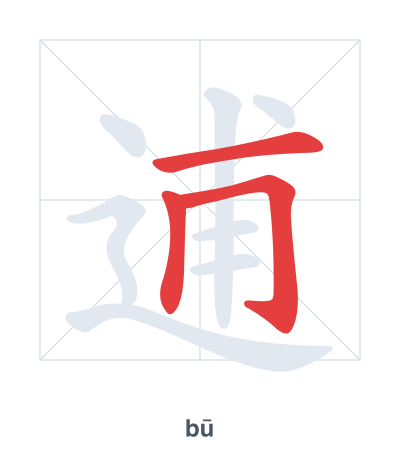
Open Hanzi Writer to see the animated stroke order and practice writing 逋 with real-time feedback.
The character 逋 (bū) is written with 10 strokes. Follow the standard Chinese stroke order: top to bottom, left to right, outside before inside. The radical 辶 is one of its key components.
Practice the correct stroke order with the Hanzi Writer app to see animated stroke-by-stroke guidance with real-time feedback.
逋 means To flee / To owe.
逋 is a phono-semantic compound: the radical 辶 (walk/run) indicates movement, while the component 甫 (fǔ) provides the pronunciation bū. The original meaning 'to flee' comes from the idea of running away, often from debts or obligations, which later extended to the meaning 'to owe' as in being in arrears.
💡 Memory Tip: Picture a father (甫) taking a quick walk (辶) out the back door because he owes too much money and has to flee.
他从不逋欠房租。
tā cóng bù bū qiàn fáng zū
He is never behind on his rent.
他开始了逋逃生活。
tā kāi shǐ le bū táo shēng huó
He began a life as a fugitive.
旅客在异地逋留。
lǚ kè zài yì dì bū liú
The traveler is stranded in a foreign place.
Open Hanzi Writer to see the animated stroke order and practice writing 逋 with real-time feedback.
✨ Animated stroke order · Handwriting recognition · HSK-graded practice · Free to use
The character 逋 is made of the radical 辶 on the left, which means "walk" or "movement," and the component 甫 on the right. Since fleeing and owing both involve moving away (fleeing from debts or responsibilities), the radical directly connects to the action. The right part 甫 originally meant "begin" but here it mainly provides the sound bū, though some see it as a person starting to run.