蔗 (zhè) means "Sugarcane" in Chinese. It has 14 strokes with the radical 艹.
Rated 4.2/5 in difficulty (advanced).
Appears in 3+ common words including 甘蔗 (gān zhè), 蔗糖 (zhè táng), 蔗汁 (zhè zhī).
Due to its 14 strokes, Hanzi Writer's error detection shows 蔗 requires focused practice — most learners need 10+ attempts for consistent accuracy.
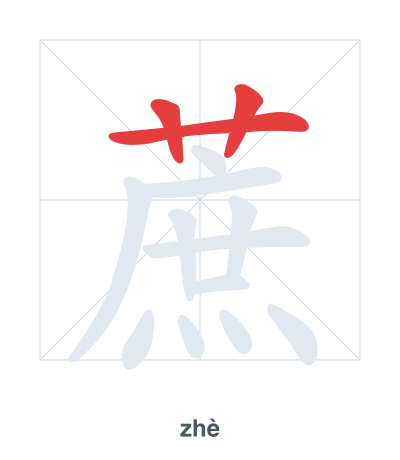
Open Hanzi Writer to see the animated stroke order and practice writing 蔗 with real-time feedback.
The character 蔗 (zhè) is written with 14 strokes. Follow the standard Chinese stroke order: top to bottom, left to right, outside before inside. The radical 艹 is one of its key components.
Practice the correct stroke order with the Hanzi Writer app to see animated stroke-by-stroke guidance with real-time feedback.
蔗 means Sugarcane.
蔗 is a phono-semantic compound. The radical 艹 (grass) indicates it is a type of plant, while 庶 (zhè) provides the pronunciation. Sugarcane is a tall, grass-like plant cultivated for its sweet juice.
💡 Memory Tip: Picture grass (艹) covering a field where many (庶) thick sugarcane stalks tower above, ready to be cut.
我喜欢吃甘蔗。
wǒ xǐ huān chī gān zhè
I like eating sugar cane.
这种饼干含有蔗糖。
zhè zhǒng bǐng gān hán yǒu zhè táng
These biscuits contain cane sugar.
请给我一杯蔗汁。
qǐng gěi wǒ yī bēi zhè zhī
Please give me a glass of sugarcane juice.
Open Hanzi Writer to see the animated stroke order and practice writing 蔗 with real-time feedback.
✨ Animated stroke order · Handwriting recognition · HSK-graded practice · Free to use
蔗 is made of the grass radical 艹 on top and the phonetic component 庶 underneath. The radical 艹 indicates that sugarcane is a type of grass plant, while 庶 (shù, meaning 'numerous' or 'common') hints at the sound zhè.