Hanzi Writer

How to Write 橐 (tuó) — Meaning “sack”

tuó 16 strokes Radical: 木

橐 (tuó) means "sack" in Chinese. It has 16 strokes with the radical 木.

Rated 4.2/5 in difficulty (advanced).

Appears in 3+ common words including 橐驼 (tuó tuó), 橐囊 (tuó náng), 橐橐 (tuó tuó).

Due to its 16 strokes, Hanzi Writer's error detection shows 橐 requires focused practice — most learners need 10+ attempts for consistent accuracy.
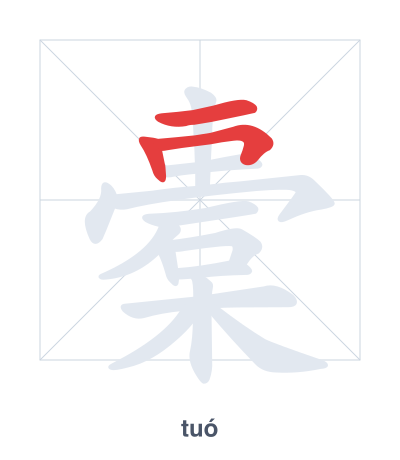
Stroke order practice for 橐 - tuó

Practice Writing 橐 (tuó)

Open Hanzi Writer to see the animated stroke order and practice writing 橐 with real-time feedback.

The character (tuó) is written with 16 strokes. Follow the standard Chinese stroke order: top to bottom, left to right, outside before inside. The radical is one of its key components.

Practice the correct stroke order with the Hanzi Writer app to see animated stroke-by-stroke guidance with real-time feedback.

means sack.

Character
Pinyintuó (tuo)
Meaningsack
Strokes16
Radical
Difficulty4.2/5

橐 combines 㯻, a pictograph of a sack tied at both ends, with 木 (wood), representing the wooden nozzle of a bellows sack used for blowing air. Together, they depict a leather bag with a wooden mouth, later extended to mean any sack.

💡 Memory Tip: Picture a sack with two tied ends (top) hanging from a tree (木), ready to carry goods.

tuó tuó
camel
tuó náng
sack / bag
tuó tuó
clatter; thumping sound (of footsteps or tapping)

橐驼在沙漠里走。

tuó tuó zài shā mò lǐ zǒu

The camel is walking in the desert.

他背着一个大橐囊。

tā bèi zhe yí gè dà tuó náng

He is carrying a large sack.

门外传来橐橐声。

mén wài zhuàn lái tuó tuó shēng

A tapping sound was heard from outside the door.

Character Pinyin Strokes Radical
(current) tuó 16
xiè 14
róng 14
zhēn 14
Stroke order practice for 橐 - tuó

Practice Writing 橐 (tuó)

Open Hanzi Writer to see the animated stroke order and practice writing 橐 with real-time feedback.

✨ Animated stroke order · Handwriting recognition · HSK-graded practice · Free to use

Frequently Asked Questions about 橐

橐 is composed of the radical 木 (wood/tree) on top and a phonetic component related to a bag shape below. The wood radical hints that sacks were once made from tree bark or woven plant fibers. The bottom part resembles a tied sack, visually reinforcing the meaning of a container or bag.

Characters with Radical 木

Other 16-Stroke Characters