Hanzi Writer

How to Write 阕 (què)

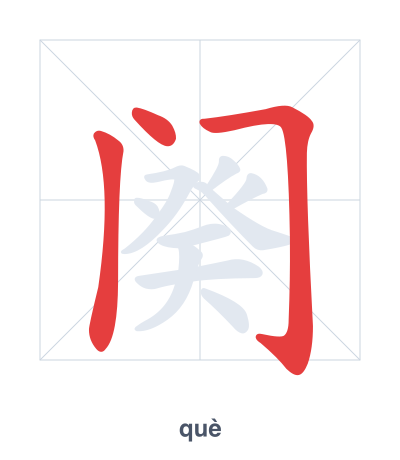
阕 (què) means "stanza (of a poem); to end" in Chinese. It has 12 strokes with the radical 门. Difficulty: 4.2/5.

què
12 strokes Radical: 门 Difficulty: 4.2/5

stanza (of a poem); to end

How to Write 阕

The character (què) is written with 12 strokes. Follow the standard Chinese stroke order: top to bottom, left to right, outside before inside. The radical is one of its key components.

Practice the correct stroke order with the Hanzi Writer app to see animated stroke-by-stroke guidance with real-time feedback.

Meaning & Pronunciation

is pronounced què in Mandarin Chinese. It means stanza (of a poem); to end.

Common Words with 阕

一阕 yī què
a song; a poem
终阕 zhōng què
The end of a musical piece or poem
阕下 què xià
under the watchtower

Example Sentences

他写了一阕词。

tā xiě le yī què cí

He wrote a Ci poem.

乐曲终阕。

yuè qǔ zhōng què

The musical piece has come to an end.

阕下有很多人。

què xià yǒu hěn duō rén

There are many people under the watchtower.

Similar Characters

chù
kǔn
jiū
Stroke order practice for 阕 - què

Practice Writing 阕 (què)

Open Hanzi Writer to see the animated stroke order and practice writing 阕 with real-time feedback.

Frequently Asked Questions about 阕

Related Characters