Hanzi Writer

How to Write 黏 (nián) — Meaning “Sticky”

nián HSK Level 7 17 strokes Radical: 黍

黏 (nián) means "Sticky" in Chinese. It has 17 strokes with the radical 黍, and is HSK Level 7.

Rated 4.2/5 in difficulty (advanced).

Harder than 100% of HSK Level 7 characters.

Appears in 3+ common words including 黏土 (nián tǔ), 黏液 (nián yè), 黏糊 (nián hú).

Due to its 17 strokes, Hanzi Writer's error detection shows 黏 requires focused practice — most learners need 10+ attempts for consistent accuracy.
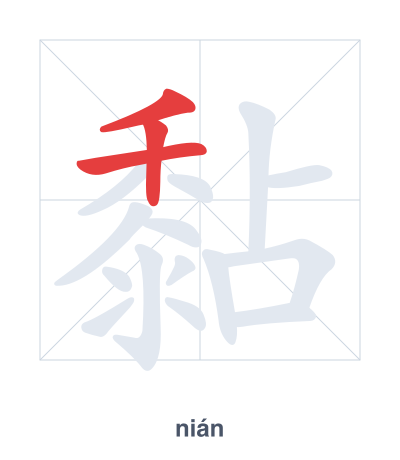
Stroke order practice for 黏 - nián

Practice Writing 黏 (nián)

Open Hanzi Writer to see the animated stroke order and practice writing 黏 with real-time feedback.

The character (nián) is written with 17 strokes. Follow the standard Chinese stroke order: top to bottom, left to right, outside before inside. The radical is one of its key components.

Practice the correct stroke order with the Hanzi Writer app to see animated stroke-by-stroke guidance with real-time feedback.

means Sticky.

As an HSK Level 7 character, is an intermediate-level character.

Character
Pinyinnián (nian)
MeaningSticky
Strokes17
Radical
HSK Level7
Difficulty4.2/5

黏 is a phono-semantic compound: the radical 黍 (millet) hints at sticky glue made from millet, while 占 (zhàn, to occupy) contributes sound and suggests the idea of clinging or sticking fast.

💡 Memory Tip: Imagine millet grains (黍) glued together so firmly they occupy (占) your hands—everything gets sticky.

nián tǔ
Clay
nián yè
Mucus
nián hú
Sticky / Glutinous

孩子在玩黏土。

hái zi zài wán nián tǔ

The child is playing with clay.

这种鱼有黏液。

zhè zhǒng yú yǒu nián yè

This kind of fish has mucus.

他的手黏糊糊的。

tā de shǒu nián hú hú de

His hands are sticky.

Character Pinyin Strokes Radical
(current) nián 17
15
Stroke order practice for 黏 - nián

Practice Writing 黏 (nián)

Open Hanzi Writer to see the animated stroke order and practice writing 黏 with real-time feedback.

✨ Animated stroke order · Handwriting recognition · HSK-graded practice · Free to use

Frequently Asked Questions about 黏

黏 is composed of the radical 黍 (shǔ, millet) on the left and a phonetic and semantic component 占 on the right. The radical 黍 suggests grain, which when cooked becomes sticky, and 占 hints at the pronunciation "nián." Together, the character conveys the idea of stickiness, as millet glue was traditionally used as an adhesive.

More HSK Level 7 Characters

Characters with Radical 黍

Other 17-Stroke Characters