Hanzi Writer

How to Write 猕 (mí) — Meaning “Macaque”

11 strokes Radical: 犭

猕 (mí) means "Macaque" in Chinese. It has 11 strokes with the radical 犭.

Rated 4.2/5 in difficulty (advanced).

Appears in 3+ common words including 猕猴桃 (mí hóu táo), 猕猴 (mí hóu), 小猕猴 (xiǎo mí hóu).

Due to its 11 strokes, Hanzi Writer's error detection shows 猕 requires focused practice — most learners need 10+ attempts for consistent accuracy.
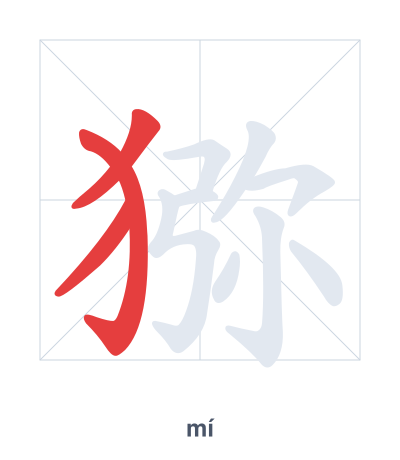
Stroke order practice for 猕 - mí

Practice Writing 猕 (mí)

Open Hanzi Writer to see the animated stroke order and practice writing 猕 with real-time feedback.

The character (mí) is written with 11 strokes. Follow the standard Chinese stroke order: top to bottom, left to right, outside before inside. The radical is one of its key components.

Practice the correct stroke order with the Hanzi Writer app to see animated stroke-by-stroke guidance with real-time feedback.

means Macaque.

Character
Pinyinmí (mi)
MeaningMacaque
Strokes11
Radical
Difficulty4.2/5

The character 猕 is a phono-semantic compound. The left radical 犭 (quǎn, 'animal') indicates it refers to a type of beast, while the right component 弥 (mí) provides the pronunciation and was originally a pictograph of a bow (弓) with a string, giving a sense of 'to fill' or 'to cover'—though here it functions purely as a phonetic element for the word 'macaque'.

💡 Memory Tip: Picture a macaque (犭) grabbing a bow (弓) and pointing it at you (尔), saying 'Mí! Mí!' to remember the sound.

mí hóu táo
Kiwi fruit
mí hóu
Macaque / Rhesus monkey
xiǎo mí hóu
baby macaque

猕猴桃很好吃。

mí hóu táo hěn hǎo chī

Kiwi fruit is delicious.

山上有很多猕猴。

shān shàng yǒu hěn duō mí hóu

There are many macaques on the mountain.

小猕猴在吃香蕉。

xiǎo mí hóu zài chī xiāng jiāo

The baby macaque is eating a banana.

Character Pinyin Strokes Radical
(current) 11
9
hěn 9
jiǎo 9
Stroke order practice for 猕 - mí

Practice Writing 猕 (mí)

Open Hanzi Writer to see the animated stroke order and practice writing 猕 with real-time feedback.

✨ Animated stroke order · Handwriting recognition · HSK-graded practice · Free to use

Frequently Asked Questions about 猕

In 猕, the left part is the radical 犭 (dog), which means the character is related to animals. The right part is 弥 (mí), which mainly gives the sound but also hints at the idea of 'filling' - macaques are known for their cheek pouches that fill with food. So together, 猕 means 'macaque', a type of monkey with furry cheeks.

Characters with Radical 犭

Other 11-Stroke Characters