Hanzi Writer

How to Write 殡 (bìn) — Meaning “to prepare a body for burial; funeral”

bìn 14 strokes Radical: 歹

殡 (bìn) means "to prepare a body for burial; funeral" in Chinese. It has 14 strokes with the radical 歹.

Rated 4.2/5 in difficulty (advanced).

Appears in 3+ common words including 殡仪馆 (bìn yí guǎn), 出殡 (chū bìn), 殡葬 (bìn zàng).

Due to its 14 strokes, Hanzi Writer's error detection shows 殡 requires focused practice — most learners need 10+ attempts for consistent accuracy.
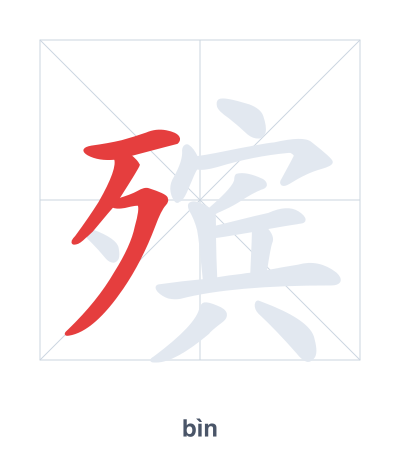
Stroke order practice for 殡 - bìn

Practice Writing 殡 (bìn)

Open Hanzi Writer to see the animated stroke order and practice writing 殡 with real-time feedback.

The character (bìn) is written with 14 strokes. Follow the standard Chinese stroke order: top to bottom, left to right, outside before inside. The radical is one of its key components.

Practice the correct stroke order with the Hanzi Writer app to see animated stroke-by-stroke guidance with real-time feedback.

means to prepare a body for burial; funeral.

Character
Pinyinbìn (bin)
Meaningto prepare a body for burial; funeral
Strokes14
Radical
Difficulty4.2/5

The character 殡 combines the radical 歹 (death/bad) with 宾 meaning 'guest.' Together, they evoke the idea of treating the deceased as a guest during funeral rites, specifically the preparation and encoffining of the body. This reflects the traditional care given to the dead before burial.

💡 Memory Tip: Picture a dead body (歹) being politely escorted by a guest (宾) to the funeral ceremony.

bìn yí guǎn
funeral parlor; mortuary
chū bìn
funeral procession
bìn zàng
funeral and burial

我们去殡仪馆告别。

wǒ men qù bìn yí guǎn gào bié

Let's go to the funeral home to pay our respects.

明天早上举行出殡仪式。

míng tiān zǎo shàng jǔ xíng chū bìn yí shì

The funeral procession ceremony will be held tomorrow morning.

这里的殡葬服务很周到。

zhè lǐ de bìn zàng fú wù hěn zhōu dào

The funeral services here are very thoughtful.

Character Pinyin Strokes Radical
(current) bìn 14
shi / zhí 12
12
dān 12
Stroke order practice for 殡 - bìn

Practice Writing 殡 (bìn)

Open Hanzi Writer to see the animated stroke order and practice writing 殡 with real-time feedback.

✨ Animated stroke order · Handwriting recognition · HSK-graded practice · Free to use

Frequently Asked Questions about 殡

殡 combines the radical 歹 (death) on the left with 宾 (guest) on the right. The 歹 component links the character to death or dying, while 宾 suggests the deceased is being treated as a guest for the funeral. Together, they form the idea of "preparing a body for burial" or "funeral."

Characters with Radical 歹

Other 14-Stroke Characters