Hanzi Writer

How to Write 殆 (dài)

殆 (dài) means "dangerous; almost; nearly" in Chinese. It has 9 strokes with the radical 歹. Difficulty: 4/5.

dài
9 strokes Radical: 歹 Difficulty: 4/5

dangerous; almost; nearly

How to Write 殆

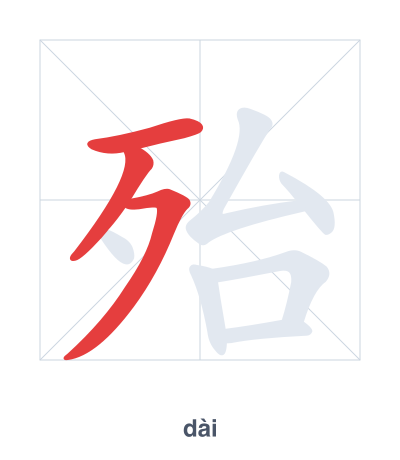
The character (dài) is written with 9 strokes. Follow the standard Chinese stroke order: top to bottom, left to right, outside before inside. The radical is one of its key components.

Practice the correct stroke order with the Hanzi Writer app to see animated stroke-by-stroke guidance with real-time feedback.

Meaning & Pronunciation

is pronounced dài in Mandarin Chinese. It means dangerous; almost; nearly.

Common Words with 殆

殆尽 dài jìn
nearly exhausted; almost all gone
危殆 wēi dài
in critical danger; precarious
殆无 dài wú
almost none

Example Sentences

资源几乎殆尽了。

zī yuán jī hū dài jìn le

The resources are almost exhausted.

他的情况非常危殆。

tā de qíng kuàng fēi cháng wēi dài

His situation is very critical.

这种机会殆无可能。

zhè zhǒng jī huì dài wú kě néng

This opportunity is almost impossible.

Similar Characters

jiān
Stroke order practice for 殆 - dài

Practice Writing 殆 (dài)

Open Hanzi Writer to see the animated stroke order and practice writing 殆 with real-time feedback.

Frequently Asked Questions about 殆

Related Characters