跸 (bì) means "To clear the way for an emperor." in Chinese. It has 13 strokes with the radical 足.
Rated 4.2/5 in difficulty (advanced).
Appears in 3+ common words including 警跸 (jǐng bì), 驻跸 (zhù bì), 跸路 (bì lù).
Due to its 13 strokes, Hanzi Writer's error detection shows 跸 requires focused practice — most learners need 10+ attempts for consistent accuracy.
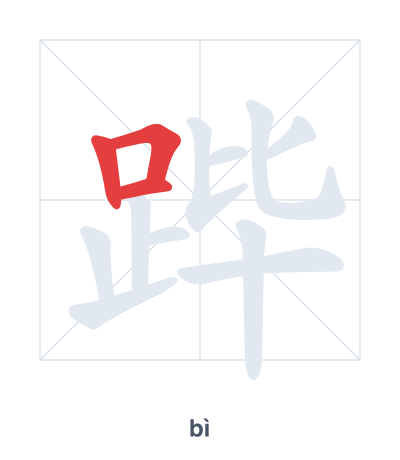
Open Hanzi Writer to see the animated stroke order and practice writing 跸 with real-time feedback.
The character 跸 (bì) is written with 13 strokes. Follow the standard Chinese stroke order: top to bottom, left to right, outside before inside. The radical 足 is one of its key components.
Practice the correct stroke order with the Hanzi Writer app to see animated stroke-by-stroke guidance with real-time feedback.
跸 means To clear the way for an emperor..
跸 is a compound character: the left radical 足 (foot) indicates movement, while the right component 毕 (bì) originally meant 'to finish' or 'stop' — together, they depict the act of halting traffic with foot patrols to clear the emperor's path.
💡 Memory Tip: Imagine a royal foot (足) stamping as ten (十) guards compare (比) notes to clear every obstacle for the emperor.
街道上正在警跸。
jiē dào shàng zhèng zài jǐng bì
The street is being cleared for a VIP passage.
皇帝在此地驻跸。
huáng dì zài cǐ dì zhù bì
The Emperor stayed here during his journey.
随从在前边跸路。
suí cóng zài qián biān bì lù
Attendants are clearing the way ahead.
Open Hanzi Writer to see the animated stroke order and practice writing 跸 with real-time feedback.
✨ Animated stroke order · Handwriting recognition · HSK-graded practice · Free to use
跸 is composed of the radical 足 (foot) on the left, which implies movement or travel, and the component 毕 (bì, meaning 'to finish') on the right, which gives the sound. Together, they suggest the action of clearing the road by foot for an emperor's procession, ensuring a finished or unobstructed path.