Hanzi Writer

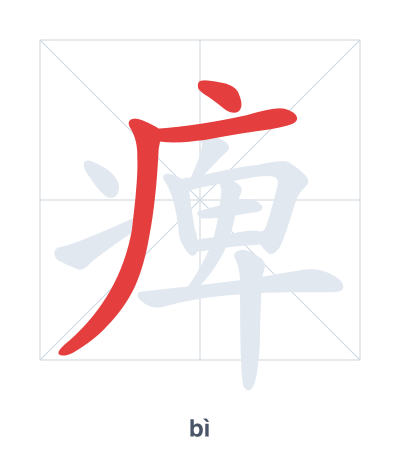
How to Write 痺 (bì)

痺 (bì) means "numbness; paralysis" in Chinese. It has 13 strokes with the radical 疒. Difficulty: 4.2/5.

13 strokes Radical: 疒 Difficulty: 4.2/5

numbness; paralysis

How to Write 痺

The character (bì) is written with 13 strokes. Follow the standard Chinese stroke order: top to bottom, left to right, outside before inside. The radical is one of its key components.

Practice the correct stroke order with the Hanzi Writer app to see animated stroke-by-stroke guidance with real-time feedback.

Meaning & Pronunciation

is pronounced in Mandarin Chinese. It means numbness; paralysis.

Common Words with 痺

麻痺 má bì
paralysis / numbness
痺症 bì zhèng
Bi syndrome
痺痛 bì tòng
pain from Bi syndrome

Example Sentences

我们不能麻痺大意。

wǒ men bù néng má bì dà yì

We cannot be careless.

这是常见的痺症。

zhè shì cháng jiàn de bì zhèng

This is a common numbness syndrome.

关节感到有些痺痛。

guān jié gǎn dào yǒu xiē bì tòng

My joints feel a bit numb and painful.

Similar Characters

quán
Stroke order practice for 痺 - bì

Practice Writing 痺 (bì)

Open Hanzi Writer to see the animated stroke order and practice writing 痺 with real-time feedback.

Frequently Asked Questions about 痺

Related Characters