租 (zū) means "rent" in Chinese. It has 10 strokes with the radical 禾, and is HSK Level 2.
Rated 3.7/5 in difficulty (challenging).
Harder than 89% of HSK Level 2 characters.
Appears in 3+ common words including 出租 (chū zū), 房租 (fáng zū), 租车 (zū chē).
Due to its 10 strokes, Hanzi Writer's error detection shows 租 requires focused practice — most learners need 10+ attempts for consistent accuracy.
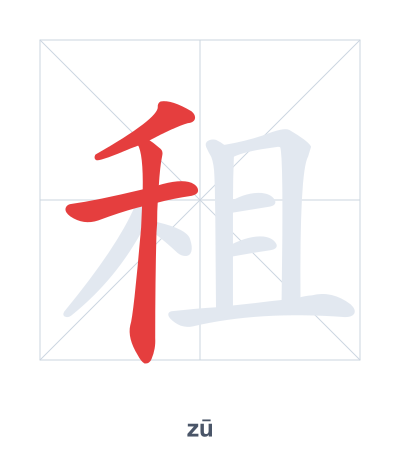
Open Hanzi Writer to see the animated stroke order and practice writing 租 with real-time feedback.
The character 租 (zū) is written with 10 strokes. Follow the standard Chinese stroke order: top to bottom, left to right, outside before inside. The radical 禾 is one of its key components.
Practice the correct stroke order with the Hanzi Writer app to see animated stroke-by-stroke guidance with real-time feedback.
租 means rent.
As an HSK Level 2 character, 租 is among the first characters beginners learn.
租 is a compound character combining 禾 (grain) and 且 (phonetic component, originally an ancestral altar). In ancient China, rent was commonly paid in grain, so the character uses the grain radical to indicate the nature of payment. The right side 且 provides pronunciation and may also hint at the idea of 'adding' or 'giving' grain as tribute.
💡 Memory Tip: Picture a farmer stacking bundles of grain (禾) on a table (且) as payment for his land rent.
这间房子要出租。
zhè jiān fáng zi yào chū zū
This house is for rent.
每个月的房租很贵。
měi gè yuè de fáng zū hěn guì
The monthly rent is very expensive.
我们去租车行租车吧。
wǒ men qù zū chē háng zū chē ba
Let's go to the car rental agency to rent a car.
Open Hanzi Writer to see the animated stroke order and practice writing 租 with real-time feedback.
✨ Animated stroke order · Handwriting recognition · HSK-graded practice · Free to use
租 is made of two parts: the left radical 禾 (grain) and the right component 且 (qiě, meaning 'also' or 'temporary'). The grain radical hints that renting originally involved land or crops, while 且 adds the idea of temporary use—you use something for a while and also pay for it.