獐 (zhāng) means "River deer" in Chinese. It has 14 strokes with the radical 犭.
Rated 4.2/5 in difficulty (advanced).
Appears in 3+ common words including 獐子 (zhāng zi), 獐头鼠目 (zhāng tóu shǔ mù), 獐鹿 (zhāng lù).
Due to its 14 strokes, Hanzi Writer's error detection shows 獐 requires focused practice — most learners need 10+ attempts for consistent accuracy.
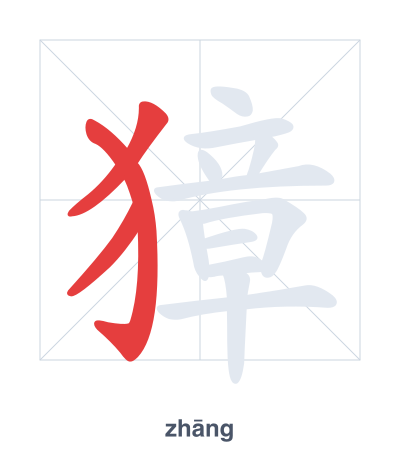
Open Hanzi Writer to see the animated stroke order and practice writing 獐 with real-time feedback.
The character 獐 (zhāng) is written with 14 strokes. Follow the standard Chinese stroke order: top to bottom, left to right, outside before inside. The radical 犭 is one of its key components.
Practice the correct stroke order with the Hanzi Writer app to see animated stroke-by-stroke guidance with real-time feedback.
獐 means River deer.
獐 is a compound character combining the animal radical 犭 (meaning beast or dog) with 章 (zhāng, meaning chapter or seal). The left radical indicates it is an animal, while 章 provides the sound and may suggest the deer's distinctive striped patterns resembling stamped markings.
💡 Memory Tip: Picture a river deer (犭) with a stamped chapter (章) on its side to remember its name.
獐子在草地上跑。
zhāng zi zài cǎo dì shàng pǎo
The river deer is running on the grass.
这个人长得獐头鼠目。
zhè ge rén zhǎng dé zhāng tóu shǔ mù
This person has a shifty and repulsive appearance.
森林里有獐鹿。
sēn lín lǐ yǒu zhāng lù
There are river deer in the forest.
Open Hanzi Writer to see the animated stroke order and practice writing 獐 with real-time feedback.
✨ Animated stroke order · Handwriting recognition · HSK-graded practice · Free to use
獐 has two parts: the left side is the radical 犭 (dog radical), which often appears in characters for animals. The right side is 章 (zhāng), which gives the sound and also suggests 'pattern' or 'chapter' — river deer have patterned skin. So the character combines the meaning of animal (犭) with a sound hint (章).