Hanzi Writer

How to Write 劄 (zhā) — Meaning “brief note or memorandum”

zhā 14 strokes Radical: 刂

劄 (zhā) means "brief note or memorandum" in Chinese. It has 14 strokes with the radical 刂.

Rated 3.9/5 in difficulty (challenging).

Appears in 3+ common words including 劄记 (zhā jì), 奏劄 (zòu zhā), 劄子 (zhā zi).

Due to its 14 strokes, Hanzi Writer's error detection shows 劄 requires focused practice — most learners need 10+ attempts for consistent accuracy.
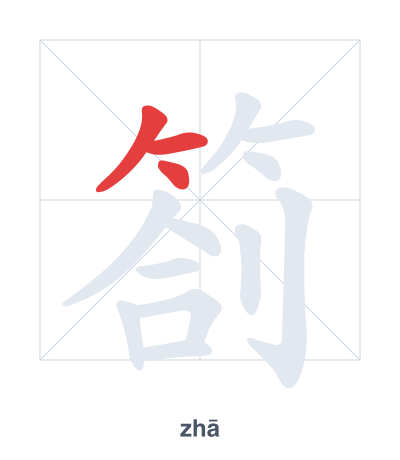
Stroke order practice for 劄 - zhā

Practice Writing 劄 (zhā)

Open Hanzi Writer to see the animated stroke order and practice writing 劄 with real-time feedback.

The character (zhā) is written with 14 strokes. Follow the standard Chinese stroke order: top to bottom, left to right, outside before inside. The radical is one of its key components.

Practice the correct stroke order with the Hanzi Writer app to see animated stroke-by-stroke guidance with real-time feedback.

means brief note or memorandum.

Character
Pinyinzhā (zha)
Meaningbrief note or memorandum
Strokes14
Radical
Difficulty3.9/5

劄 combines 答 (to answer) on the left and 刂 (knife) on the right. The knife radical reflects the ancient practice of cutting bamboo slips into small tablets for writing short memoranda or official replies, linking the character's form to its meaning of a brief note.

💡 Memory Tip: Picture a knife (刂) slicing a bamboo slip (答) into a tiny strip for a quick answer note.

zhā jì
reading notes
zòu zhā
memorial to the throne
zhā zi
memorandum or brief note

老师在写劄记。

lǎo shī zài xiě zhā jì

The teacher is writing reading notes.

这是古代的奏劄。

zhè shì gǔ dài de zòu zhā

This is an ancient memorial to the throne.

他看完了这个劄子。

tā kàn wán le zhè ge zhā zi

He finished reading this brief note.

Character Pinyin Strokes Radical
(current) zhā 14
shèng 12
12
12
Stroke order practice for 劄 - zhā

Practice Writing 劄 (zhā)

Open Hanzi Writer to see the animated stroke order and practice writing 劄 with real-time feedback.

✨ Animated stroke order · Handwriting recognition · HSK-graded practice · Free to use

Frequently Asked Questions about 劄

劄 is made of two parts: the top radical 竹 (bamboo) and the bottom radical 刂 (knife). Bamboo was used for ancient writing slips, and the knife suggests carving or cutting, together implying a note carved on bamboo. This structure reflects the original meaning of a brief memorandum written on bamboo strips.

Characters with Radical 刂

Other 14-Stroke Characters