Hanzi Writer

How to Write 疃 (tuǎn) — Meaning “Village / Hamlet”

tuǎn 17 strokes Radical: 田

疃 (tuǎn) means "Village / Hamlet" in Chinese. It has 17 strokes with the radical 田.

Rated 4.2/5 in difficulty (advanced).

Appears in 3+ common words including 疃子 (tuǎn zi), 屯疃 (tún tuǎn), 皇姑疃 (huáng gū tuǎn).

Due to its 17 strokes, Hanzi Writer's error detection shows 疃 requires focused practice — most learners need 10+ attempts for consistent accuracy.
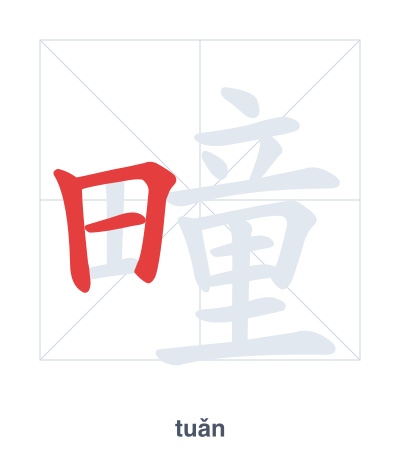
Stroke order practice for 疃 - tuǎn

Practice Writing 疃 (tuǎn)

Open Hanzi Writer to see the animated stroke order and practice writing 疃 with real-time feedback.

The character (tuǎn) is written with 17 strokes. Follow the standard Chinese stroke order: top to bottom, left to right, outside before inside. The radical is one of its key components.

Practice the correct stroke order with the Hanzi Writer app to see animated stroke-by-stroke guidance with real-time feedback.

means Village / Hamlet.

Character
Pinyintuǎn (tuan)
MeaningVillage / Hamlet
Strokes17
Radical
Difficulty4.2/5

疃 is a phono-semantic compound: the left side 田 (field) indicates its agricultural setting, while the right side 童 (child) provides pronunciation and also contains 里 (village), reinforcing the idea of a small settlement. Together, the character evokes a hamlet or village nestled within fields, where children might play.

💡 Memory Tip: Picture a field (田) where a child (童) runs around, marking the location of a tiny village (疃).

tuǎn zi
Small village / Settlement
tún tuǎn
village; settlement
huáng gū tuǎn
Huanggutuan (a place name)

这个疃子很大。

zhè ge tuǎn zi hěn dà

This village is very large.

远处有一个屯疃。

yuǎn chù yǒu yí gè tún tuǎn

There is a village in the distance.

他去过皇姑疃。

tā qù guò huáng gū tuǎn

He has been to Huanggutuan.

Character Pinyin Strokes Radical
(current) tuǎn 17
léi 15
15
jiāng 19
Stroke order practice for 疃 - tuǎn

Practice Writing 疃 (tuǎn)

Open Hanzi Writer to see the animated stroke order and practice writing 疃 with real-time feedback.

✨ Animated stroke order · Handwriting recognition · HSK-graded practice · Free to use

Frequently Asked Questions about 疃

疃 is composed of the radical 田 (field) on the left and the phonetic component 童 (tóng, child) on the right. The 田 radical suggests land or agriculture, which fits a village or hamlet. The right part 童 adds the sound tuǎn, but note that 童 itself means "child," possibly hinting at a small or humble settlement.

Characters with Radical 田

Other 17-Stroke Characters