Hanzi Writer

How to Write 荽 (suī)

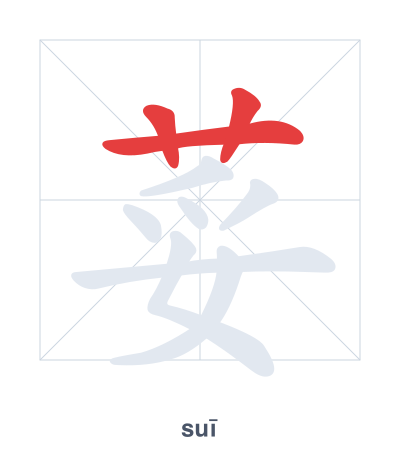
荽 (suī) means "Coriander (short for 芫荽)" in Chinese. It has 10 strokes with the radical 艹. Difficulty: 4.2/5.

suī
10 strokes Radical: 艹 Difficulty: 4.2/5

Coriander (short for 芫荽)

How to Write 荽

The character (suī) is written with 10 strokes. Follow the standard Chinese stroke order: top to bottom, left to right, outside before inside. The radical is one of its key components.

Practice the correct stroke order with the Hanzi Writer app to see animated stroke-by-stroke guidance with real-time feedback.

Meaning & Pronunciation

is pronounced suī in Mandarin Chinese. It means Coriander (short for 芫荽).

Common Words with 荽

芫荽 yán suī
Coriander / Cilantro
香荽 xiāng suī
Coriander
荽菜 suī cài
Coriander or cilantro

Example Sentences

我不喜欢在汤里放芫荽。

wǒ bù xǐ huān zài tāng lǐ fàng yán suī

I don't like putting coriander in soup.

这种香荽的味道很香。

zhè zhǒng xiāng suī de wèi dào hěn xiāng

This kind of coriander smells very fragrant.

他在菜里加了一些荽菜。

tā zài cài lǐ jiā le yī xiē suī cài

He added some coriander to the dish.

Similar Characters

yuàn
rǎn
Stroke order practice for 荽 - suī

Practice Writing 荽 (suī)

Open Hanzi Writer to see the animated stroke order and practice writing 荽 with real-time feedback.

Frequently Asked Questions about 荽

Related Characters