簌 (sù) means "rustle" in Chinese. It has 17 strokes with the radical 竹.
Rated 4.2/5 in difficulty (advanced).
Appears in 3+ common words including 簌簌 (sù sù), 簌落 (sù luò), 扑簌 (pū sù).
Due to its 17 strokes, Hanzi Writer's error detection shows 簌 requires focused practice — most learners need 10+ attempts for consistent accuracy.
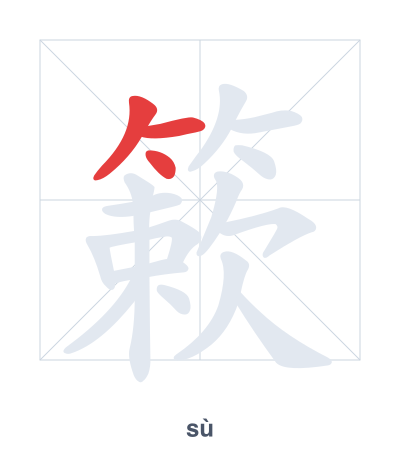
Open Hanzi Writer to see the animated stroke order and practice writing 簌 with real-time feedback.
The character 簌 (sù) is written with 17 strokes. Follow the standard Chinese stroke order: top to bottom, left to right, outside before inside. The radical 竹 is one of its key components.
Practice the correct stroke order with the Hanzi Writer app to see animated stroke-by-stroke guidance with real-time feedback.
簌 means rustle.
簌 is a compound character with bamboo (竹) as the semantic component, indicating its connection to plants or bamboo-related sounds. The phonetic component 束 (shù, meaning 'bundle') provides the approximate pronunciation. Together, they evoke the rustling sound made by bamboo leaves or bundled twigs when stirred by wind.
💡 Memory Tip: Imagine a bundle (束) of bamboo (竹) stalks rubbing together to make a soft 'sù' rustle.
树叶簌簌地落了一地。
shù yè sù sù dì là le yī dì
The leaves rustled and fell all over the ground.
灰尘从天花板上簌落。
huī chén cóng tiān huā bǎn shàng sù luò
Dust fell from the ceiling.
她的眼泪扑簌而下。
tā de yǎn lèi pū sù ér xià
Her tears fell pattering down.
Open Hanzi Writer to see the animated stroke order and practice writing 簌 with real-time feedback.
✨ Animated stroke order · Handwriting recognition · HSK-graded practice · Free to use
簌 is made of the radical 竹 (bamboo) on top, and the phonetic component 欠 (to owe, but here indicating sound) below. The bamboo radical suggests the character is connected to bamboo or plant-related rustling sounds. Together, they form the idea of a rustling noise, like bamboo leaves moving.