Hanzi Writer

How to Write 阙 (quē)

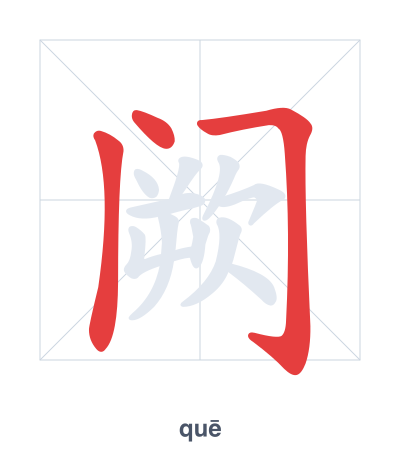
阙 (quē) means "watchtower; gap; deficiency" in Chinese. It has 13 strokes with the radical 门. Difficulty: 4.2/5.

quē / què
13 strokes Radical: 门 Difficulty: 4.2/5

watchtower; gap; deficiency

How to Write 阙

The character (quē) is written with 13 strokes. Follow the standard Chinese stroke order: top to bottom, left to right, outside before inside. The radical is one of its key components.

Practice the correct stroke order with the Hanzi Writer app to see animated stroke-by-stroke guidance with real-time feedback.

Meaning & Pronunciation

is pronounced quē in Mandarin Chinese. It means watchtower; gap; deficiency.

This is a polyphonic character with readings: quē, què.

Common Words with 阙

宫阙 gōng què
Imperial palace gates
城阙 chéng què
Watchtower on a city gate.
阙如 quē rú
lacking; missing

Example Sentences

宫阙非常宏伟。

gōng què fēi cháng hóng wěi

The imperial palace is very grand.

远望城阙。

yuǎn wàng chéng què

Gazing at the city towers from afar.

这种资料尚属阙如。

zhè zhǒng zī liào shàng shǔ quē rú

This kind of data is still lacking.

Similar Characters

chù
Stroke order practice for 阙 - quē

Practice Writing 阙 (quē)

Open Hanzi Writer to see the animated stroke order and practice writing 阙 with real-time feedback.

Frequently Asked Questions about 阙

Related Characters