Hanzi Writer

How to Write 垲 (kǎi) — Meaning “high and dry land”

kǎi 9 strokes Radical: 土

垲 (kǎi) means "high and dry land" in Chinese. It has 9 strokes with the radical 土.

Rated 4/5 in difficulty (challenging).

Appears in 3+ common words including 垲燥 (kǎi zào), 爽垲 (shuǎng kǎi), 高垲 (gāo kǎi).

Due to its 9 strokes, Hanzi Writer's error detection shows 垲 requires focused practice — most learners need 10+ attempts for consistent accuracy.
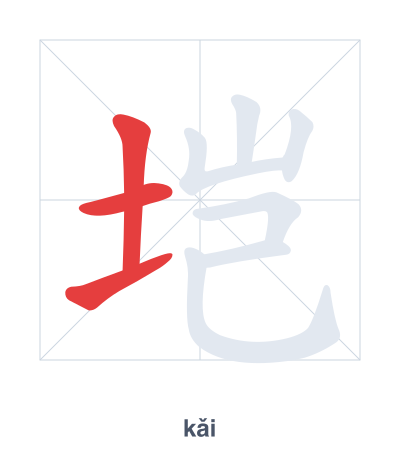
Stroke order practice for 垲 - kǎi

Practice Writing 垲 (kǎi)

Open Hanzi Writer to see the animated stroke order and practice writing 垲 with real-time feedback.

The character (kǎi) is written with 9 strokes. Follow the standard Chinese stroke order: top to bottom, left to right, outside before inside. The radical is one of its key components.

Practice the correct stroke order with the Hanzi Writer app to see animated stroke-by-stroke guidance with real-time feedback.

means high and dry land.

Character
Pinyinkǎi (kai)
Meaninghigh and dry land
Strokes9
Radical
Difficulty4/5

This character is a phono-semantic compound. The radical 土 (earth) indicates land, while the phonetic component 岂 (kǎi) provides the pronunciation, together forming 'high and dry land.'

💡 Memory Tip: Picture a dry, elevated mound of earth (土) with a flag (岂) planted on top, signaling it's high and safe from flooding.

kǎi zào
high and dry (of land or climate)
shuǎng kǎi
High and dry (referring to terrain).
gāo kǎi
high and dry land

这里的气候很垲燥。

zhè lǐ de qì hòu hěn kǎi zào

The climate here is high and dry.

这个地方很爽垲。

zhè ge dì fāng hěn shuǎng kǎi

This place is high, dry, and spacious.

房子建在高垲处。

fáng zi jiàn zài gāo kǎi chù

The house is built on high ground.

Character Pinyin Strokes Radical
(current) kǎi 9
7
niè 7
zhǐ 7
Stroke order practice for 垲 - kǎi

Practice Writing 垲 (kǎi)

Open Hanzi Writer to see the animated stroke order and practice writing 垲 with real-time feedback.

✨ Animated stroke order · Handwriting recognition · HSK-graded practice · Free to use

Frequently Asked Questions about 垲

垲 is made of two parts: the radical 土 (earth) on the left and 岂 on the right. The 土 radical shows the meaning relates to land or soil, while 岂 (pronounced qǐ, but here used phonetically as kǎi) hints at the pronunciation. Together, 土 + 岂 suggests high, dry ground that can support people or buildings.

Characters with Radical 土

Other 9-Stroke Characters