腈 (jīng) means "Nitrile" in Chinese. It has 12 strokes with the radical 月.
Rated 4.2/5 in difficulty (advanced).
Appears in 3+ common words including 腈纶 (jīng lún), 腈基 (jīng jī), 丙烯腈 (bǐng xī jīng).
Due to its 12 strokes, Hanzi Writer's error detection shows 腈 requires focused practice — most learners need 10+ attempts for consistent accuracy.
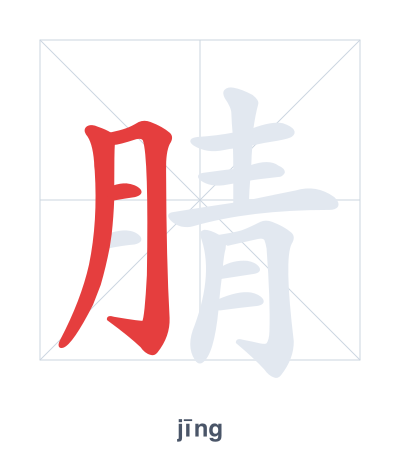
Open Hanzi Writer to see the animated stroke order and practice writing 腈 with real-time feedback.
The character 腈 (jīng) is written with 12 strokes. Follow the standard Chinese stroke order: top to bottom, left to right, outside before inside. The radical 月 is one of its key components.
Practice the correct stroke order with the Hanzi Writer app to see animated stroke-by-stroke guidance with real-time feedback.
腈 means Nitrile.
腈 is a modern phono-semantic compound created for the chemical term 'nitrile'. The radical 月 (flesh/meat) indicates it relates to organic compounds, while 青 (qīng, blue/green) provides the approximate pronunciation (jīng) and hints at the synthetic nature of nitriles, which are often used in plastics and synthetic fibers.
💡 Memory Tip: Picture a lump of raw meat (月) with a blue-green chemical stain (青) warning you it contains toxic nitrile compounds.
这件衣服是腈纶的。
zhè jiàn yī fú shì jīng lún de
This piece of clothing is made of acrylic.
这是一个腈基。
zhè shì yí gè jīng jī
This is a cyano group.
丙烯腈是化工原料。
bǐng xī jīng shì huà gōng yuán liào
Acrylonitrile is a chemical raw material.
Open Hanzi Writer to see the animated stroke order and practice writing 腈 with real-time feedback.
✨ Animated stroke order · Handwriting recognition · HSK-graded practice · Free to use
The left side is 月 (the flesh radical), and the right side is 青 (qīng, meaning green). This character is a modern chemical term for "nitrile" and does not directly relate to the literal meanings of its parts; instead, 青 provides the pronunciation jīng.