殛 (jí) means "to put to death; to kill" in Chinese. It has 12 strokes with the radical 歹.
Rated 4.2/5 in difficulty (advanced).
Appears in 3+ common words including 雷殛 (léi jí), 殛毙 (jí bì), 惩殛 (chéng jí).
Due to its 12 strokes, Hanzi Writer's error detection shows 殛 requires focused practice — most learners need 10+ attempts for consistent accuracy.
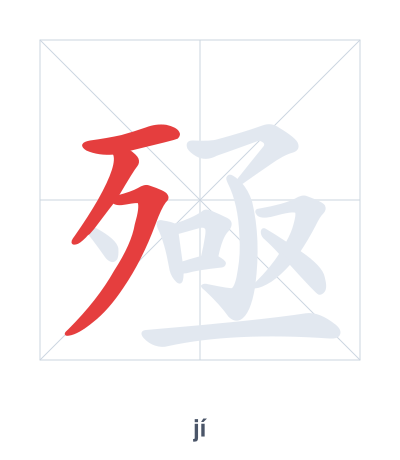
Open Hanzi Writer to see the animated stroke order and practice writing 殛 with real-time feedback.
The character 殛 (jí) is written with 12 strokes. Follow the standard Chinese stroke order: top to bottom, left to right, outside before inside. The radical 歹 is one of its key components.
Practice the correct stroke order with the Hanzi Writer app to see animated stroke-by-stroke guidance with real-time feedback.
殛 means to put to death; to kill.
| Character | 殛 |
| Pinyin | jí (ji) |
| Meaning | to put to death; to kill |
| Strokes | 12 |
| Radical | 歹 |
| Difficulty | 4.2/5 |
殛 is a phono-semantic compound. The radical 歹 (bare bones, meaning death or danger) indicates the meaning is related to killing. The phonetic component 亟 (jí, meaning 'urgent' or 'extreme') suggests the action is done swiftly or with severe finality, combining to depict putting someone to death urgently.
💡 Memory Tip: Picture a Grim Reaper (歹) with an urgent (亟) alarm clock ticking down—when it hits zero, death is instant.
那棵大树被雷殛了。
nà kē dà shù bèi léi jí le
That big tree was struck by lightning.
罪犯被当场殛毙。
zuì fàn bèi dāng chǎng jí bì
The criminal was killed on the spot.
法律会惩殛坏人。
fǎ lǜ huì chéng jí huài rén
The law will punish and execute the wicked.
Open Hanzi Writer to see the animated stroke order and practice writing 殛 with real-time feedback.
✨ Animated stroke order · Handwriting recognition · HSK-graded practice · Free to use
The left radical 歹 means death or decay, indicating the character's connection to killing or death. The right part 亟 provides the pronunciation and also carries a sense of urgency or severity, together suggesting a severe form of killing.