隄 (dī) means "Dike / Embankment" in Chinese. It has 11 strokes with the radical 阝.
Rated 3.9/5 in difficulty (challenging).
Appears in 3+ common words including 河隄 (hé dī), 隄岸 (dī àn), 隄防 (dī fáng).
Due to its 11 strokes, Hanzi Writer's error detection shows 隄 requires focused practice — most learners need 10+ attempts for consistent accuracy.
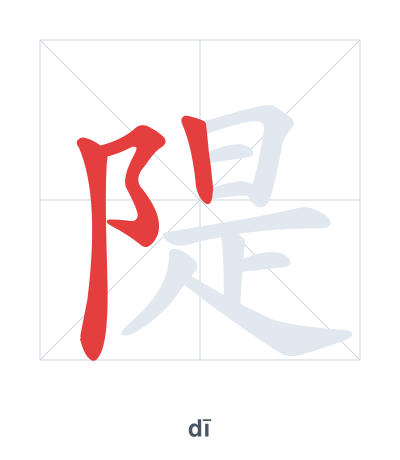
Open Hanzi Writer to see the animated stroke order and practice writing 隄 with real-time feedback.
The character 隄 (dī) is written with 11 strokes. Follow the standard Chinese stroke order: top to bottom, left to right, outside before inside. The radical 阝 is one of its key components.
Practice the correct stroke order with the Hanzi Writer app to see animated stroke-by-stroke guidance with real-time feedback.
隄 means Dike / Embankment.
隄 is a phono-semantic compound where the left radical 阝 (a variant of 阜, meaning 'mound' or 'earth') signifies an earthen structure, and the right component 是 (pronounced shì) provides phonetic cues. This combination indicates a raised earthwork used to hold back water, hence a dike or embankment.
💡 Memory Tip: Imagine a dike that is so sturdy it says 'This (是) mound (阝) is here to stay!' as it blocks the flood.
河隄上开满了花。
hé dī shàng kāi mǎn le huā
The river embankment is covered with flowers.
我们在隄岸散步。
wǒ men zài dī àn sàn bù
We are walking on the embankment.
筑起隄防防止洪水。
zhù qǐ dī fáng fáng zhǐ hóng shuǐ
Build a levee to prevent flooding.
Open Hanzi Writer to see the animated stroke order and practice writing 隄 with real-time feedback.
✨ Animated stroke order · Handwriting recognition · HSK-graded practice · Free to use
隄 is made of two parts: the left radical 阝 (meaning mound or hill) and the right part 是 (which gives the pronunciation dī). The 阝 radical connects the character to earth structures like dikes, while 是 acts as a phonetic hint that this character sounds like dī.