镝 (dī) means "dysprosium (element)" in Chinese. It has 16 strokes with the radical 钅.
Rated 4.2/5 in difficulty (advanced).
Appears in 3+ common words including 鸣镝 (míng dī), 镝灯 (dī dēng), 箭镝 (jiàn dī).
Due to its 16 strokes, Hanzi Writer's error detection shows 镝 requires focused practice — most learners need 10+ attempts for consistent accuracy.
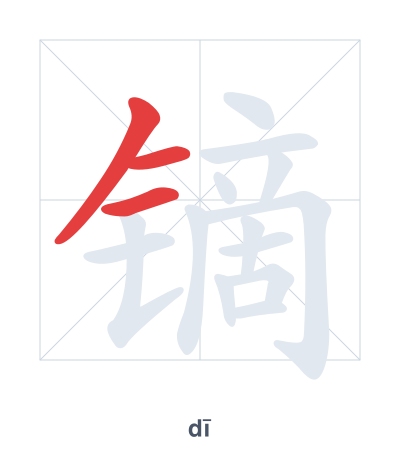
Open Hanzi Writer to see the animated stroke order and practice writing 镝 with real-time feedback.
The character 镝 (dī) is written with 16 strokes. Follow the standard Chinese stroke order: top to bottom, left to right, outside before inside. The radical 钅 is one of its key components.
Practice the correct stroke order with the Hanzi Writer app to see animated stroke-by-stroke guidance with real-time feedback.
镝 means dysprosium (element).
This compound character combines the metal radical 钅 with 啷 (dí), which originally depicted an arrowhead or target. Together they signified a metal arrowhead, but the character was later borrowed to represent the element dysprosium due to phonetic approximation.
💡 Memory Tip: Picture a metal (钅) arrowhead (啷) labeled 'Dy' sticking into a target, reminding you this is dysprosium.
鸣镝划破了天空。
míng dī huà pò le tiān kōng
The whistling arrow pierced the sky.
球场开了镝灯。
qiú chǎng kāi le dī dēng
The stadium turned on the floodlights.
箭镝非常锋利。
jiàn dī fēi cháng fēng lì
The arrowhead is very sharp.
Open Hanzi Writer to see the animated stroke order and practice writing 镝 with real-time feedback.
✨ Animated stroke order · Handwriting recognition · HSK-graded practice · Free to use
镝 is a phono-semantic compound. The left part 钅 (jīn) means 'metal' or 'gold', indicating the character relates to a metallic element. The right part 啇 (dí) provides the pronunciation clue, though its original meaning is separate.