锵 (qiāng) means "clang; clink (sound of metal)" in Chinese. It has 14 strokes with the radical 钅.
Rated 4.2/5 in difficulty (advanced).
Appears in 3+ common words including 锵锵 (qiāng qiāng), 铿锵 (kēng qiāng), 锵鸣 (qiāng míng).
Due to its 14 strokes, Hanzi Writer's error detection shows 锵 requires focused practice — most learners need 10+ attempts for consistent accuracy.
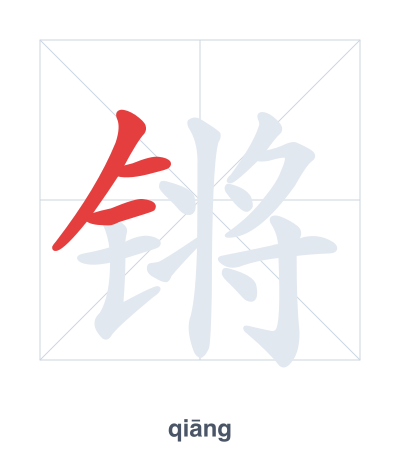
Open Hanzi Writer to see the animated stroke order and practice writing 锵 with real-time feedback.
The character 锵 (qiāng) is written with 14 strokes. Follow the standard Chinese stroke order: top to bottom, left to right, outside before inside. The radical 钅 is one of its key components.
Practice the correct stroke order with the Hanzi Writer app to see animated stroke-by-stroke guidance with real-time feedback.
锵 means clang; clink (sound of metal).
锵 is a phono-semantic compound: the radical 钅 (metal) indicates the clanging sound of metal, while the phonetic component 将 (jiāng) gives a rough pronunciation hint. The character visually combines metal with a sense of action or leading, as in the clash of metal tools or weapons.
💡 Memory Tip: Picture a metal (钅) general (将) striking his sword against a shield, producing a loud 'clang' (锵).
凤凰鸣声锵锵。
fèng huáng míng shēng qiāng qiāng
The phoenix sings with a rhythmic, clanging sound.
他的话很铿锵。
tā de huà hěn kēng qiāng
His words were powerful and resonant.
钟声锵鸣。
zhōng shēng qiāng míng
The bell is clanging.
Open Hanzi Writer to see the animated stroke order and practice writing 锵 with real-time feedback.
✨ Animated stroke order · Handwriting recognition · HSK-graded practice · Free to use
锵 is composed of the radical 钅 (metal, gold) on the left and the phonetic component 将 on the right. The metal radical suggests the character relates to metal objects, while the sound comes from 将. Together, they create the meaning of a clanging or clinking sound made by metal.