Hanzi Writer

How to Write 陬 (zōu) — Meaning “corner or remote place”

zōu 10 strokes Radical: 阝

陬 (zōu) means "corner or remote place" in Chinese. It has 10 strokes with the radical 阝.

Rated 3.9/5 in difficulty (challenging).

Appears in 3+ common words including 陬隅 (zōu yú), 孟陬 (mèng zōu), 远陬 (yuǎn zōu).

Due to its 10 strokes, Hanzi Writer's error detection shows 陬 requires focused practice — most learners need 10+ attempts for consistent accuracy.
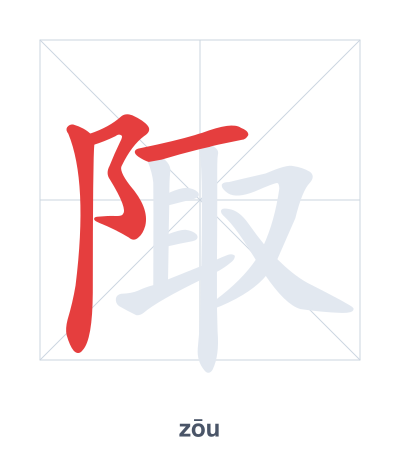
Stroke order practice for 陬 - zōu

Practice Writing 陬 (zōu)

Open Hanzi Writer to see the animated stroke order and practice writing 陬 with real-time feedback.

The character (zōu) is written with 10 strokes. Follow the standard Chinese stroke order: top to bottom, left to right, outside before inside. The radical is one of its key components.

Practice the correct stroke order with the Hanzi Writer app to see animated stroke-by-stroke guidance with real-time feedback.

means corner or remote place.

Character
Pinyinzōu (zou)
Meaningcorner or remote place
Strokes10
Radical
Difficulty3.9/5

陬 combines the radical 阝 (a hill or mound) with 取 (qǔ, 'to take'), which provides the sound. The ancient Chinese viewed remote corners as tucked-away spots on hillsides, so the character visually suggests a hill that has been 'taken' or isolated as a secluded nook.

💡 Memory Tip: Picture a hill (阝) where someone is taking (取) a nap in a hidden corner far from the path.

zōu yú
corner or nook
mèng zōu
the first month of the lunar year
yuǎn zōu
remote corner

这里的陬隅很安静。

zhè lǐ de zōu yú hěn ān jìng

This corner here is very quiet.

孟陬是农历一月。

mèng zōu shì nóng lì yí yuè

Mengzou is the first month of the lunar calendar.

他住在偏远的远陬。

tā zhù zài piān yuǎn de yuǎn zōu

He lives in a remote corner.

Character Pinyin Strokes Radical
(current) zōu 10
zhū 8
8
qiè 8
Stroke order practice for 陬 - zōu

Practice Writing 陬 (zōu)

Open Hanzi Writer to see the animated stroke order and practice writing 陬 with real-time feedback.

✨ Animated stroke order · Handwriting recognition · HSK-graded practice · Free to use

Frequently Asked Questions about 陬

陬 is composed of the radical 阝 (meaning 'mound' or 'hill') on the left and the phonetic component 取 (qǔ, meaning 'take') on the right. The left side 阝 hints at a location or place, while the right side 取 provides pronunciation; together they suggest a 'corner of a hill' or a 'remote spot.' This structure explains why 陬 means a corner or a distant, secluded place.

Characters with Radical 阝

Other 10-Stroke Characters