Hanzi Writer

How to Write 趑 (zī)

趑 (zī) means "To falter; to hesitate." in Chinese. It has 13 strokes with the radical 走. Difficulty: 4.2/5.

13 strokes Radical: 走 Difficulty: 4.2/5

To falter; to hesitate.

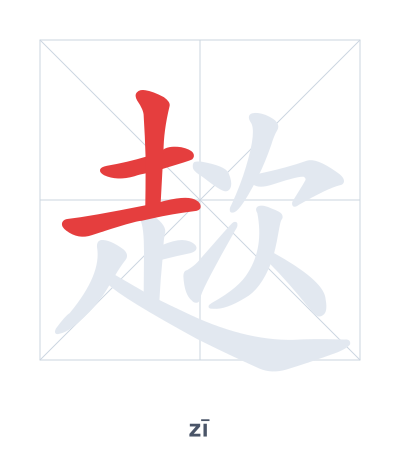
How to Write 趑

The character (zī) is written with 13 strokes. Follow the standard Chinese stroke order: top to bottom, left to right, outside before inside. The radical is one of its key components.

Practice the correct stroke order with the Hanzi Writer app to see animated stroke-by-stroke guidance with real-time feedback.

Meaning & Pronunciation

is pronounced in Mandarin Chinese. It means To falter; to hesitate..

Common Words with 趑

趑趄 zī jū
To hesitate; to falter.
趑趄不前 zī jū bù qián
To hesitate to move forward.
趑趄不进 zī jū bù jìn
To hesitate to advance.

Example Sentences

他在门口趑趄。

tā zài mén kǒu zī jū

He is faltering at the door.

别再趑趄不前了。

bié zài zī jū bù qián le

Stop hesitating to move forward.

他趑趄不进,不敢说话。

tā zī jū bù jìn bù gǎn shuō huà

He hesitated to move forward and didn't dare to speak.

Similar Characters

chèn
chāo
Stroke order practice for 趑 - zī

Practice Writing 趑 (zī)

Open Hanzi Writer to see the animated stroke order and practice writing 趑 with real-time feedback.

Frequently Asked Questions about 趑

Related Characters