揸 (zhā) means "to clutch; to grasp" in Chinese. It has 12 strokes with the radical 扌.
Rated 4.2/5 in difficulty (advanced).
Appears in 3+ common words including 揸笔 (zhā bǐ), 揸紧 (zhā jǐn), 揸手 (zhā shǒu).
Due to its 12 strokes, Hanzi Writer's error detection shows 揸 requires focused practice — most learners need 10+ attempts for consistent accuracy.
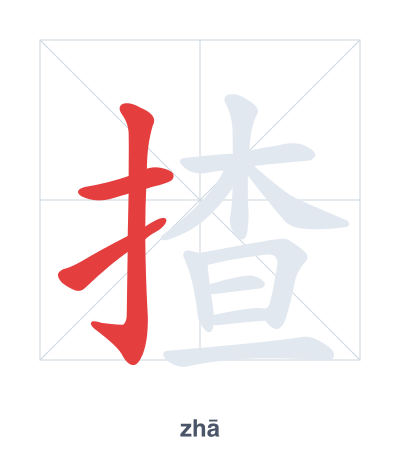
Open Hanzi Writer to see the animated stroke order and practice writing 揸 with real-time feedback.
The character 揸 (zhā) is written with 12 strokes. Follow the standard Chinese stroke order: top to bottom, left to right, outside before inside. The radical 扌 is one of its key components.
Practice the correct stroke order with the Hanzi Writer app to see animated stroke-by-stroke guidance with real-time feedback.
揸 means to clutch; to grasp.
揸 is a phono-semantic compound: the hand radical 扌 indicates an action done with the hand, while 查 (chá, 'to examine') provides the sound cue and suggests a grasping motion as if checking something by clutching it tightly.
💡 Memory Tip: Picture your hand (扌) checking (查) a fruit by clutching it firmly to feel if it's ripe.
他在练习揸笔。
tā zài liàn xí zhā bǐ
He is practicing how to hold a pen.
请揸紧你的包。
qǐng zhā jǐn nǐ de bāo
Please hold your bag tightly.
两人见面先揸手。
liǎng rén jiàn miàn xiān zhā shǒu
The two shook hands first when they met.
Open Hanzi Writer to see the animated stroke order and practice writing 揸 with real-time feedback.
✨ Animated stroke order · Handwriting recognition · HSK-graded practice · Free to use
揸 is made of the hand radical 扌 on the left and the phonetic component 查 (to check) on the right. The hand radical shows that the character involves a hand action, and the right part provides the pronunciation zhā. Together they create the meaning of clutching or grasping with the hand.