觎 (yú) means "To desire; to covet" in Chinese. It has 13 strokes with the radical 见.
Rated 4.2/5 in difficulty (advanced).
Appears in 3+ common words including 觊觎 (jì yú), 觎望 (yú wàng), 窥觎 (kuī yú).
Due to its 13 strokes, Hanzi Writer's error detection shows 觎 requires focused practice — most learners need 10+ attempts for consistent accuracy.
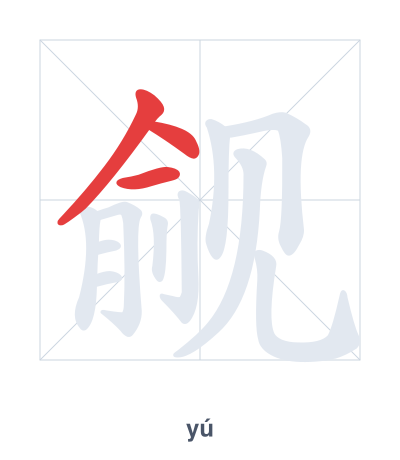
Open Hanzi Writer to see the animated stroke order and practice writing 觎 with real-time feedback.
The character 觎 (yú) is written with 13 strokes. Follow the standard Chinese stroke order: top to bottom, left to right, outside before inside. The radical 见 is one of its key components.
Practice the correct stroke order with the Hanzi Writer app to see animated stroke-by-stroke guidance with real-time feedback.
觎 means To desire; to covet.
| Character | 觎 |
| Pinyin | yú (yu) |
| Meaning | To desire; to covet |
| Strokes | 13 |
| Radical | 见 |
| Difficulty | 4.2/5 |
觎 combines 见 (see) as a semantic component with 俞 (yú) as a phonetic hint, suggesting 'looking at something with desire.' This character appears in the word 觊觎 (jìyú), meaning to covet or have a restless longing for what belongs to others.
💡 Memory Tip: Picture a person (俞) staring with covetous eyes (见) at a neighbor's prized possession.
不要觊觎别人的东西。
bú yào jì yú bié rén de dōng xī
Don't covet what belongs to others.
他心中充满了觎望。
tā xīn zhōng chōng mǎn le yú wàng
His heart was full of covetous desires.
他在暗中窥觎机会。
tā zài àn zhōng kuī yú jī huì
He is secretly watching for an opportunity.
Open Hanzi Writer to see the animated stroke order and practice writing 觎 with real-time feedback.
✨ Animated stroke order · Handwriting recognition · HSK-graded practice · Free to use
觎 is made of the left part 俞 (yú, providing pronunciation) and the right radical 见 (jiàn, meaning "to see"). Together, they suggest "looking at something with desire" — seeing something and wanting it.