饴 (yí) means "maltose; syrup; candy" in Chinese. It has 8 strokes with the radical 饣.
Rated 3.7/5 in difficulty (challenging).
Appears in 3+ common words including 饴糖 (yí táng), 甘之如饴 (gān zhī rú yí), 饴盐 (yí yán).
Due to its 8 strokes, Hanzi Writer's error detection shows 饴 requires focused practice — most learners need 10+ attempts for consistent accuracy.
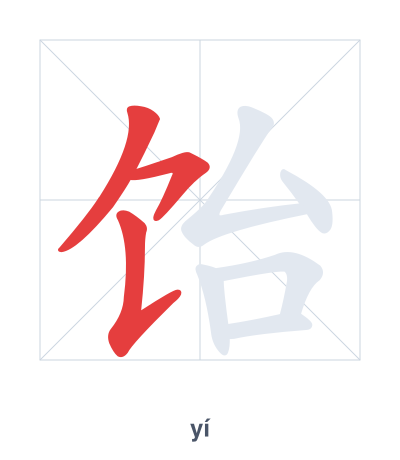
Open Hanzi Writer to see the animated stroke order and practice writing 饴 with real-time feedback.
The character 饴 (yí) is written with 8 strokes. Follow the standard Chinese stroke order: top to bottom, left to right, outside before inside. The radical 饣 is one of its key components.
Practice the correct stroke order with the Hanzi Writer app to see animated stroke-by-stroke guidance with real-time feedback.
饴 means maltose; syrup; candy.
饴 is a phono-semantic compound combining the food radical 饣 (meaning food or drink) with 台 (yí), which provides the pronunciation and originally depicted a platform. Together, they represent a sweet food substance like maltose or syrup.
💡 Memory Tip: Picture a sweet candy (饴) sitting on a platform (台) waiting to be eaten with a spoon (饣).
这种饴糖非常甜。
zhè zhǒng yí táng fēi cháng tián
This maltose is very sweet.
他对这种生活甘之如饴。
tā duì zhè zhǒng shēng huó gān zhī rú yí
He enjoyed this kind of life despite the hardships.
这种饴盐很少见。
zhè zhǒng yí yán hěn shǎo jiàn
This rock salt is very rare.
Open Hanzi Writer to see the animated stroke order and practice writing 饴 with real-time feedback.
✨ Animated stroke order · Handwriting recognition · HSK-graded practice · Free to use
饴 is composed of the radical 饣 (food) on the left and 台 (yí, meaning platform or terrace) on the right. The food radical hints that it is related to edible items, and the phonetic component 台 gives the pronunciation yí. Together they form the meaning of sweet, sticky food like maltose or syrup.