唁 (yàn) means "To offer condolences." in Chinese. It has 10 strokes with the radical 口.
Rated 4.2/5 in difficulty (advanced).
Appears in 3+ common words including 吊唁 (diào yàn), 唁电 (yàn diàn), 慰唁 (wèi yàn).
Due to its 10 strokes, Hanzi Writer's error detection shows 唁 requires focused practice — most learners need 10+ attempts for consistent accuracy.
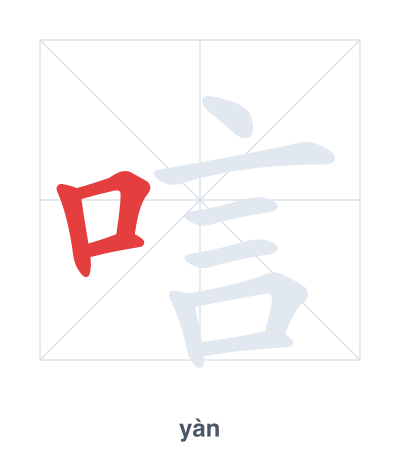
Open Hanzi Writer to see the animated stroke order and practice writing 唁 with real-time feedback.
The character 唁 (yàn) is written with 10 strokes. Follow the standard Chinese stroke order: top to bottom, left to right, outside before inside. The radical 口 is one of its key components.
Practice the correct stroke order with the Hanzi Writer app to see animated stroke-by-stroke guidance with real-time feedback.
唁 means To offer condolences..
唁 is a compound character combining the radical 口 (mouth) and the phonetic component 言 (speech). The mouth radical indicates that the character relates to spoken words, while 言 suggests the act of speaking, together conveying the idea of offering condolences through speech.
💡 Memory Tip: Picture a grieving friend using their mouth (口) to say words of comfort (言) at a funeral, offering their sincere condolences.
很多人去吊唁他。
hěn duō rén qù diào yàn tā
Many people went to offer their condolences.
他发了一封唁电。
tā fā le yī fēng yàn diàn
He sent a message of condolence.
朋友们纷纷表示慰唁。
péng yǒu men fēn fēn biǎo shì wèi yàn
Friends expressed their condolences one after another.
Open Hanzi Writer to see the animated stroke order and practice writing 唁 with real-time feedback.
✨ Animated stroke order · Handwriting recognition · HSK-graded practice · Free to use
唁 is composed of the radical 口 (mouth) on the left and the phonetic component 言 (yán, speech) on the right. The mouth radical suggests speaking or expressing, while 言 indicates sound, together meaning to offer condolences through spoken words or messages.