蜒 (yán) means "slug; millipede (component)" in Chinese. It has 12 strokes with the radical 虫.
Rated 4.2/5 in difficulty (advanced).
Appears in 3+ common words including 蜿蜒 (wān yán), 蚰蜒 (yóu yán), 蜒蚰 (yán yóu).
Due to its 12 strokes, Hanzi Writer's error detection shows 蜒 requires focused practice — most learners need 10+ attempts for consistent accuracy.
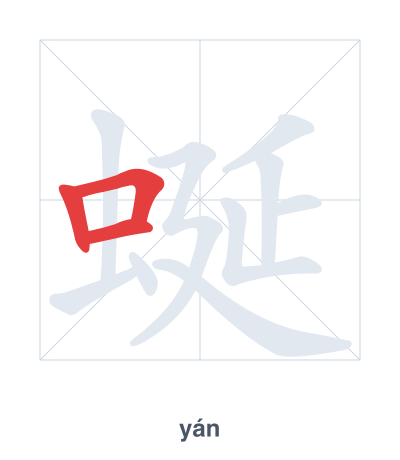
Open Hanzi Writer to see the animated stroke order and practice writing 蜒 with real-time feedback.
The character 蜒 (yán) is written with 12 strokes. Follow the standard Chinese stroke order: top to bottom, left to right, outside before inside. The radical 虫 is one of its key components.
Practice the correct stroke order with the Hanzi Writer app to see animated stroke-by-stroke guidance with real-time feedback.
蜒 means slug; millipede (component).
This compound character combines the insect radical 虫 (meaning bug or worm) with 延 (yán, meaning 'to extend' or 'prolong'), suggesting a long, slender creature like a slug or millipede that stretches its body as it moves.
💡 Memory Tip: Imagine a millipede (虫) stretching its long body like a squiggly line (延) across the ground.
山路蜿蜒向上。
shān lù wān yán xiàng shàng
The mountain road winds upward.
墙角有一只蚰蜒。
qiáng jiǎo yǒu yī zhī yóu yán
There is a house centipede in the corner.
蜒蚰在草地上爬。
yán yóu zài cǎo dì shàng pá
The slug is crawling on the grass.
Open Hanzi Writer to see the animated stroke order and practice writing 蜒 with real-time feedback.
✨ Animated stroke order · Handwriting recognition · HSK-graded practice · Free to use
The character 蜒 consists of the radical 虫 (insect) on the left and 延 (to extend) on the right. 虫 indicates that the character relates to insects or small creatures, while 延 contributes the sound and idea of stretching or extending. Together, they represent long, crawling animals like slugs or millipedes that move by extending their bodies.