阌 (wén) means "place name (used in ancient geography)" in Chinese. It has 11 strokes with the radical 门.
Rated 4.2/5 in difficulty (advanced).
Appears in 3+ common words including 阌乡 (wén xiāng), 阌里 (wén lǐ), 阌川 (wén chuān).
Due to its 11 strokes, Hanzi Writer's error detection shows 阌 requires focused practice — most learners need 10+ attempts for consistent accuracy.
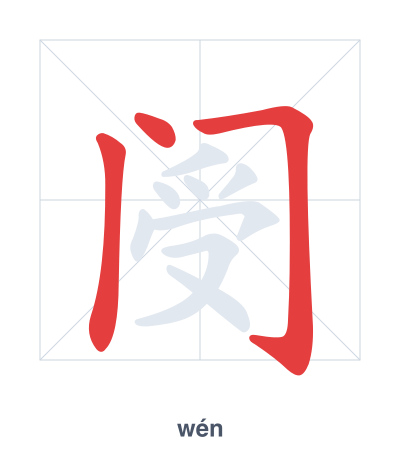
Open Hanzi Writer to see the animated stroke order and practice writing 阌 with real-time feedback.
The character 阌 (wén) is written with 11 strokes. Follow the standard Chinese stroke order: top to bottom, left to right, outside before inside. The radical 门 is one of its key components.
Practice the correct stroke order with the Hanzi Writer app to see animated stroke-by-stroke guidance with real-time feedback.
阌 means place name (used in ancient geography).
阌 is a compound character with the radical 门 (gate) and the component 受 (to receive), suggesting a gate that welcomes visitors. It was historically used as the name of an ancient county in Henan, possibly referring to a welcoming entry point.
💡 Memory Tip: Imagine a gate (门) where two hands (爫 and 又) reach out to receive a guest – this welcoming scene marks the ancient place 阌.
阌乡是一个古老的地名。
wén xiāng shì yí gè gǔ lǎo de dì míng
Wenxiang is an ancient place name.
他出生在阌里这个地方。
tā chū shēng zài wén lǐ zhè ge dì fāng
He was born in a place called Wenli.
阌川的风景非常优美。
wén chuān de fēng jǐng fēi cháng yōu měi
The scenery of Wenchuan is very beautiful.
Open Hanzi Writer to see the animated stroke order and practice writing 阌 with real-time feedback.
✨ Animated stroke order · Handwriting recognition · HSK-graded practice · Free to use
阌 is made of the radical 门 (door/gate) on the outside and the character 文 (wén, meaning literature or pattern) inside. The 门 radical suggests an enclosed area like a town, while 文 provides the sound (wén) and hints at a cultured place. This structure fits its use as an ancient place name, like a walled settlement with literary heritage.