Hanzi Writer

How to Write 跷 (qiāo) — Meaning “To lift up a leg; to tilt.”

qiāo 13 strokes Radical: 足

跷 (qiāo) means "To lift up a leg; to tilt." in Chinese. It has 13 strokes with the radical 足.

Rated 4.2/5 in difficulty (advanced).

Appears in 3+ common words including 跷跷板 (qiāo qiāo bǎn), 跷二郎腿 (qiāo èr láng tuǐ), 踩高跷 (cǎi gāo qiāo).

Due to its 13 strokes, Hanzi Writer's error detection shows 跷 requires focused practice — most learners need 10+ attempts for consistent accuracy.
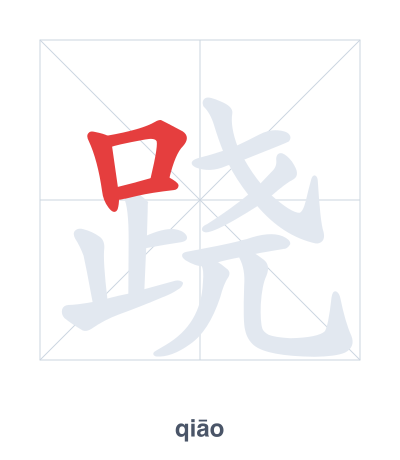
Stroke order practice for 跷 - qiāo

Practice Writing 跷 (qiāo)

Open Hanzi Writer to see the animated stroke order and practice writing 跷 with real-time feedback.

The character (qiāo) is written with 13 strokes. Follow the standard Chinese stroke order: top to bottom, left to right, outside before inside. The radical is one of its key components.

Practice the correct stroke order with the Hanzi Writer app to see animated stroke-by-stroke guidance with real-time feedback.

means To lift up a leg; to tilt..

Character
Pinyinqiāo (qiao)
MeaningTo lift up a leg; to tilt.
Strokes13
Radical
Difficulty4.2/5

This compound character combines the radical 足 (foot) with 尧 (yáo), which provides phonetic and semantic hints of height or lifting. The foot radical indicates the action involves the legs, while 尧 suggests raising upward, together depicting the act of lifting a leg or tilting the body.

💡 Memory Tip: Picture a person on a seesaw (跷跷板) lifting one leg high in the air to shift their weight and tilt the board.

qiāo qiāo bǎn
Seesaw.
qiāo èr láng tuǐ
To cross one's legs.
cǎi gāo qiāo
to walk on stilts

孩子们在玩跷跷板。

hái zi men zài wán qiāo qiāo bǎn

The children are playing on the seesaw.

他喜欢跷二郎腿。

tā xǐ huān qiāo èr láng tuǐ

He likes to sit with his legs crossed.

爷爷会踩高跷。

yé yé huì cǎi gāo qiāo

Grandpa can walk on stilts.

Character Pinyin Strokes Radical
(current) qiāo 13
tāng 15
11
jiǎn 11
Stroke order practice for 跷 - qiāo

Practice Writing 跷 (qiāo)

Open Hanzi Writer to see the animated stroke order and practice writing 跷 with real-time feedback.

✨ Animated stroke order · Handwriting recognition · HSK-graded practice · Free to use

Frequently Asked Questions about 跷

The left side is 足 (zú), meaning 'foot,' which connects to leg movements. The right side is 尧 (yáo), which contributes the pronunciation qiāo but also suggests the idea of 'lifting' or 'rising,' as in tilting upward.

Characters with Radical 足

Other 13-Stroke Characters