蜣 (qiāng) means "Dung beetle" in Chinese. It has 13 strokes with the radical 虫.
Rated 4.2/5 in difficulty (advanced).
Appears in 3+ common words including 蜣螂 (qiāng láng), 屎蜣螂 (shǐ qiāng láng), 蜣螂转 (qiāng láng zhuǎn).
Due to its 13 strokes, Hanzi Writer's error detection shows 蜣 requires focused practice — most learners need 10+ attempts for consistent accuracy.
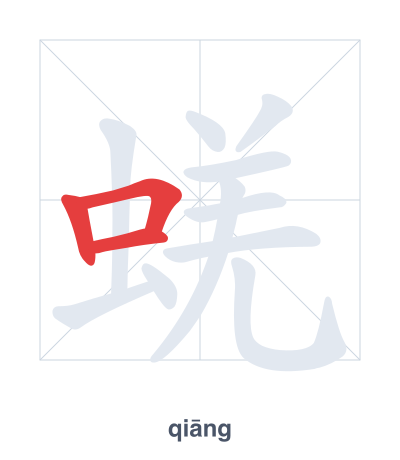
Open Hanzi Writer to see the animated stroke order and practice writing 蜣 with real-time feedback.
The character 蜣 (qiāng) is written with 13 strokes. Follow the standard Chinese stroke order: top to bottom, left to right, outside before inside. The radical 虫 is one of its key components.
Practice the correct stroke order with the Hanzi Writer app to see animated stroke-by-stroke guidance with real-time feedback.
蜣 means Dung beetle.
蜣 is a phono-semantic compound: the radical 虫 (insect) indicates the meaning, while the component 羌 (qiāng) provides the pronunciation. The character specifically refers to a dung beetle, an insect known for rolling balls of dung.
💡 Memory Tip: Imagine a dung beetle with a strong (羌 like 'qiang' meaning strong) shell made of bug (虫) parts, tirelessly rolling a huge ball of dung.
蜣螂在推泥球。
qiāng láng zài tuī ní qiú
The dung beetle is pushing a ball of mud.
屎蜣螂很有趣。
shǐ qiāng láng hěn yǒu qù
Dung beetles are very interesting.
蜣螂转得很快。
qiāng láng zhuǎn dé hěn kuài
The dung beetle is turning very fast.
Open Hanzi Writer to see the animated stroke order and practice writing 蜣 with real-time feedback.
✨ Animated stroke order · Handwriting recognition · HSK-graded practice · Free to use
The character 蜣 is composed of the radical 虫 on the left, meaning insect, and the phonetic component 羌 on the right, which gives the pronunciation qiāng. Together, they indicate an insect that is a dung beetle.