Hanzi Writer

How to Write 椪 (pèng) — Meaning “Ponkan (citrus)”

pèng 12 strokes Radical: 木

椪 (pèng) means "Ponkan (citrus)" in Chinese. It has 12 strokes with the radical 木.

Rated 4.2/5 in difficulty (advanced).

Appears in 3+ common words including 椪柑 (pèng gān), 椪糖 (pèng táng), 椪饼 (pèng bǐng).

Due to its 12 strokes, Hanzi Writer's error detection shows 椪 requires focused practice — most learners need 10+ attempts for consistent accuracy.
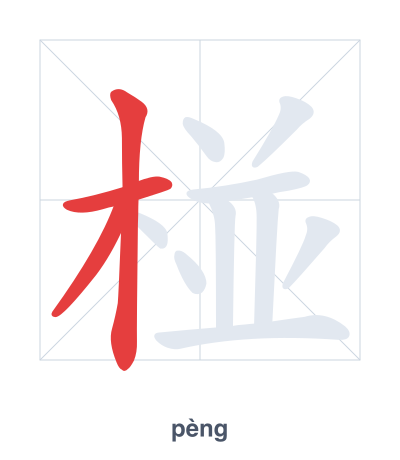
Stroke order practice for 椪 - pèng

Practice Writing 椪 (pèng)

Open Hanzi Writer to see the animated stroke order and practice writing 椪 with real-time feedback.

The character (pèng) is written with 12 strokes. Follow the standard Chinese stroke order: top to bottom, left to right, outside before inside. The radical is one of its key components.

Practice the correct stroke order with the Hanzi Writer app to see animated stroke-by-stroke guidance with real-time feedback.

means Ponkan (citrus).

Character
Pinyinpèng (peng)
MeaningPonkan (citrus)
Strokes12
Radical
Difficulty4.2/5

椪 is a phono-semantic compound where 木 (tree) indicates it is a type of fruit tree, and 并 (bìng, but here approximating pèng) serves as the phonetic component, suggesting the fruit's name from Southern Chinese dialects like 'ponkan'.

💡 Memory Tip: Picture a citrus tree (木) bearing a plump ponkan fruit shaped like two conjoined circles (并) side by side on a branch.

pèng gān
Ponkan (Chinese honey orange)
pèng táng
Honeycomb toffee / Dalgona
pèng bǐng
Pon-piah (puffed pastry)

这种椪柑水分很多。

zhè zhǒng pèng gān shuǐ fèn hěn duō

This ponkan is very juicy.

孩子们很喜欢吃椪糖。

hái zi men hěn xǐ huān chī pèng táng

The children love eating honeycomb toffee.

椪饼是这里的特产。

pèng bǐng shì zhè lǐ de tè chǎn

Pon-piah is a local specialty here.

Character Pinyin Strokes Radical
(current) pèng 12
chái 10
shuān 10
qī / xī 10
Stroke order practice for 椪 - pèng

Practice Writing 椪 (pèng)

Open Hanzi Writer to see the animated stroke order and practice writing 椪 with real-time feedback.

✨ Animated stroke order · Handwriting recognition · HSK-graded practice · Free to use

Frequently Asked Questions about 椪

椪 has the radical 木 (tree/wood) on the left, showing it relates to plants or trees. The right part is 並 (bìng, meaning 'side by side' or 'combine'), which gives the sound pèng and hints at the fruit's round segments growing together. Together, 椪 means a type of citrus fruit, the Ponkan orange.

Characters with Radical 木

Other 12-Stroke Characters