Hanzi Writer

How to Write 柑 (gān) — Meaning “Mandarin orange or tangerine.”

gān 9 strokes Radical: 木

柑 (gān) means "Mandarin orange or tangerine." in Chinese. It has 9 strokes with the radical 木.

Rated 4/5 in difficulty (challenging).

Appears in 3+ common words including 柑橘 (gān jú), 柑子 (gān zi), 青柑 (qīng gān).

Due to its 9 strokes, Hanzi Writer's error detection shows 柑 requires focused practice — most learners need 10+ attempts for consistent accuracy.
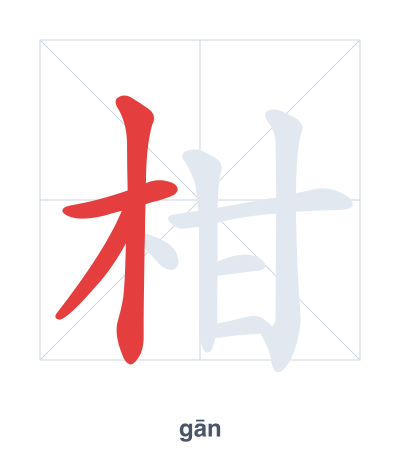
Stroke order practice for 柑 - gān

Practice Writing 柑 (gān)

Open Hanzi Writer to see the animated stroke order and practice writing 柑 with real-time feedback.

The character (gān) is written with 9 strokes. Follow the standard Chinese stroke order: top to bottom, left to right, outside before inside. The radical is one of its key components.

Practice the correct stroke order with the Hanzi Writer app to see animated stroke-by-stroke guidance with real-time feedback.

means Mandarin orange or tangerine..

Character
Pinyingān (gan)
MeaningMandarin orange or tangerine.
Strokes9
Radical
Difficulty4/5

柑 combines the radical 木 (tree) with the phonetic component 甘 (sweet), indicating a tree that bears sweet-tasting fruit. Originally referring to the mandarin orange tree, the character’s structure visually suggests a sweet citrus tree.

💡 Memory Tip: Imagine a tree (木) full of glowing, juicy mandarins that taste incredibly sweet (甘).

gān jú
Citrus.
gān zi
Mandarin orange.
qīng gān
green tangerine

我喜欢吃柑橘。

wǒ xǐ huān chī gān jú

I like eating citrus fruits.

这个柑子很甜。

zhè ge gān zi hěn tián

This mandarin orange is very sweet.

这种青柑茶很好喝。

zhè zhǒng qīng gān chá hěn hǎo hē

This green mandarin tea tastes great.

Character Pinyin Strokes Radical
(current) gān 9
gān / gǎn 7
chā / chà 7
shān 7
Stroke order practice for 柑 - gān

Practice Writing 柑 (gān)

Open Hanzi Writer to see the animated stroke order and practice writing 柑 with real-time feedback.

✨ Animated stroke order · Handwriting recognition · HSK-graded practice · Free to use

Frequently Asked Questions about 柑

The character 柑 has a left-right structure. The left radical 木 means "wood" or "tree," indicating the character relates to a fruit tree. The right part 甘 means "sweet," hinting at the sweet taste of mandarin oranges.

Characters with Radical 木

Other 9-Stroke Characters