Hanzi Writer

How to Write 貘 (mò) — Meaning “tapir”

17 strokes Radical: 豸

貘 (mò) means "tapir" in Chinese. It has 17 strokes with the radical 豸.

Rated 4.2/5 in difficulty (advanced).

Appears in 3+ common words including 食梦貘 (shí mèng mò), 马来貘 (mǎ lái mò), 山貘 (shān mò).

Due to its 17 strokes, Hanzi Writer's error detection shows 貘 requires focused practice — most learners need 10+ attempts for consistent accuracy.
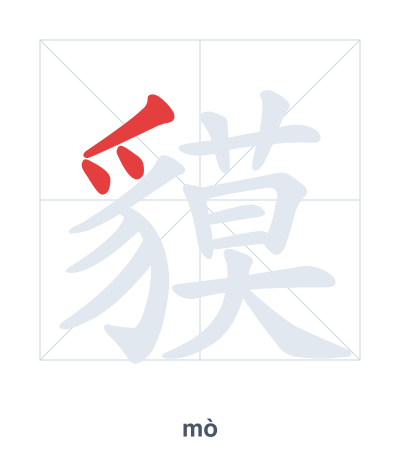
Stroke order practice for 貘 - mò

Practice Writing 貘 (mò)

Open Hanzi Writer to see the animated stroke order and practice writing 貘 with real-time feedback.

The character (mò) is written with 17 strokes. Follow the standard Chinese stroke order: top to bottom, left to right, outside before inside. The radical is one of its key components.

Practice the correct stroke order with the Hanzi Writer app to see animated stroke-by-stroke guidance with real-time feedback.

means tapir.

Character
Pinyinmò (mo)
Meaningtapir
Strokes17
Radical
Difficulty4.2/5

貘 is a phono-semantic compound. The radical 豸 (mythical beast) indicates it is an animal, while 莫 (mò) provides the pronunciation. This character describes the tapir, a large herbivorous mammal with a distinctive snout.

💡 Memory Tip: Picture a tapir with a curved snout that looks like the right side 莫, while the left 豸 represents its striped or shaggy body.

shí mèng mò
Baku (dream-eating mythical creature)
mǎ lái mò
Malayan tapir
shān mò
Mountain tapir

传说食梦貘会吃掉噩梦。

chuán shuō shí mèng mò huì chī diào è mèng

Legend says the dream-eating Baku devours nightmares.

马来貘的样子很特别。

mǎ lái mò de yàng zi hěn tè bié

The Malayan tapir looks very unique.

山貘生活在森林深处。

shān mò shēng huó zài sēn lín shēn chù

Mountain tapirs live deep in the forest.

Character Pinyin Strokes Radical
(current) 17
17
Stroke order practice for 貘 - mò

Practice Writing 貘 (mò)

Open Hanzi Writer to see the animated stroke order and practice writing 貘 with real-time feedback.

✨ Animated stroke order · Handwriting recognition · HSK-graded practice · Free to use

Frequently Asked Questions about 貘

貘 is composed of the radical 豸 (zhì), which means mythical beast or insect, and the phonetic component 莫 (mò) that hints at the pronunciation. The radical 豸 places it in the category of animal-like creatures, while 莫 provides the sound. This combination creates the character for tapir, a real animal often associated with mythical beasts in Chinese culture.

Characters with Radical 豸

Other 17-Stroke Characters