叻 (lè) means "old name for Singapore" in Chinese. It has 5 strokes with the radical 口.
Rated 2.9/5 in difficulty (moderate).
Appears in 3+ common words including 叻沙 (lè shā), 叻 (lè), 咖叻 (kā lè).
Hanzi Writer's stroke validation shows learners typically need 5-8 attempts to write 叻 with correct proportion and order.
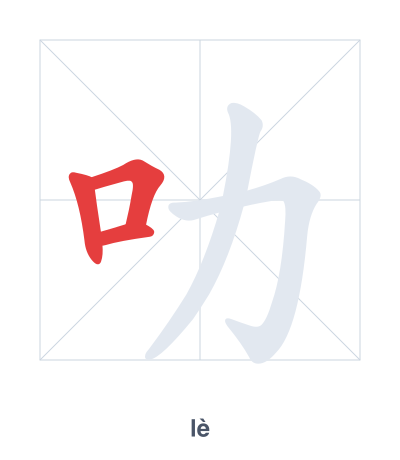
Open Hanzi Writer to see the animated stroke order and practice writing 叻 with real-time feedback.
The character 叻 (lè) is written with 5 strokes. Follow the standard Chinese stroke order: top to bottom, left to right, outside before inside. The radical 口 is one of its key components.
Practice the correct stroke order with the Hanzi Writer app to see animated stroke-by-stroke guidance with real-time feedback.
叻 means old name for Singapore.
叻 is a compound character used phonetically. The left component 口 (mouth) is the radical for speech or sound, while the right component 力 (strength/power) provides a rough phonetic clue (lì, similar to lè). Together, they create a character that historically transliterated the Malay word 'selat' (strait), giving the old Chinese name '石叻' (Shílè) for Singapore.
💡 Memory Tip: Picture a strong (力) mouth (口) roaring 'Leh!' at the busy port of old Singapore, shouting its name with power.
我非常喜欢吃叻沙。
wǒ fēi cháng xǐ huān chī lè shā
I really like eating Laksa.
叻是新加坡的旧称。
lè shì xīn jiā pō de jiù chēng
'Le' is an old name for Singapore.
这是一个地名。
zhè shì yí gè dì míng
This is a place name.
Open Hanzi Writer to see the animated stroke order and practice writing 叻 with real-time feedback.
✨ Animated stroke order · Handwriting recognition · HSK-graded practice · Free to use
叻 is made of the radical 口 (mouth) on the left and the component 力 (power) on the right. The 口 radical often appears in characters for sounds or names, while 力 gives a hint to the pronunciation (lè). Together they form a character used in the old name for Singapore and in the word for Laksa.