稂 (láng) means "weeds; bristlegrass" in Chinese. It has 12 strokes with the radical 禾.
Rated 4.2/5 in difficulty (advanced).
Appears in 3+ common words including 稂莠 (láng yǒu), 稂草 (láng cǎo), 不稂不莠 (bù láng bù yǒu).
Due to its 12 strokes, Hanzi Writer's error detection shows 稂 requires focused practice — most learners need 10+ attempts for consistent accuracy.
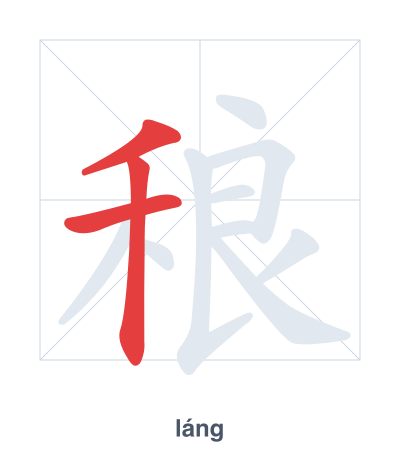
Open Hanzi Writer to see the animated stroke order and practice writing 稂 with real-time feedback.
The character 稂 (láng) is written with 12 strokes. Follow the standard Chinese stroke order: top to bottom, left to right, outside before inside. The radical 禾 is one of its key components.
Practice the correct stroke order with the Hanzi Writer app to see animated stroke-by-stroke guidance with real-time feedback.
稂 means weeds; bristlegrass.
This character is a phono-semantic compound. The radical 禾 (grain) indicates a type of plant, while 良 (liáng, meaning 'good') provides the pronunciation. Ironically, 稂 refers to weeds like bristlegrass that harm good grain crops.
💡 Memory Tip: Picture a grain stalk (禾) that looks perfectly 'good' (良) from afar, but up close it's actually a sneaky weed choking the real plants.
田里长满了稂莠。
tián lǐ zhǎng mǎn le láng yǒu
The field is overgrown with weeds.
这种稂草长得很快。
zhè zhǒng láng cǎo zhǎng dé hěn kuài
This foxtail weed grows very quickly.
这个人真是不稂不莠。
zhè ge rén zhēn shì bù láng bù yǒu
This person is truly good-for-nothing.
Open Hanzi Writer to see the animated stroke order and practice writing 稂 with real-time feedback.
✨ Animated stroke order · Handwriting recognition · HSK-graded practice · Free to use
The left side is the radical 禾, which means grain or plant, showing that 稂 relates to plants. The right side is 良 (liáng), which gives the character its pronunciation, but the overall meaning is weeds — plants that are not good grain.