隍 (huáng) means "Dry moat" in Chinese. It has 11 strokes with the radical 阝.
Rated 3.9/5 in difficulty (challenging).
Appears in 3+ common words including 城隍庙 (chéng huáng miào), 城隍 (chéng huáng), 隍池 (huáng chí).
Due to its 11 strokes, Hanzi Writer's error detection shows 隍 requires focused practice — most learners need 10+ attempts for consistent accuracy.
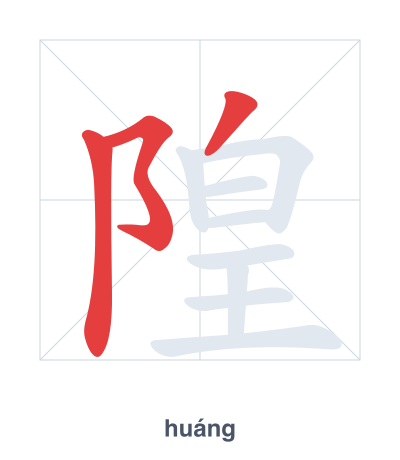
Open Hanzi Writer to see the animated stroke order and practice writing 隍 with real-time feedback.
The character 隍 (huáng) is written with 11 strokes. Follow the standard Chinese stroke order: top to bottom, left to right, outside before inside. The radical 阝 is one of its key components.
Practice the correct stroke order with the Hanzi Writer app to see animated stroke-by-stroke guidance with real-time feedback.
隍 means Dry moat.
The character 隍 combines the 'mound' radical 阝 (indicating an earthwork or elevated terrain) with the phonetic component 皇 (meaning 'emperor'). Together, they depict a dry defensive ditch surrounding a city wall—an earthwork often associated with imperial defenses.
💡 Memory Tip: Picture an emperor (皇) standing on a mound (阝) and peering down into a dry moat surrounding his fortress.
我们去城隍庙玩吧。
wǒ men qù chéng huáng miào wán ba
Let's go visit the City God Temple.
他是这里的城隍神。
tā shì zhè lǐ de chéng huáng shén
He is the City God of this place.
古城外有深深的隍池。
gǔ chéng wài yǒu shēn shēn de huáng chí
There is a deep dry moat outside the ancient city.
Open Hanzi Writer to see the animated stroke order and practice writing 隍 with real-time feedback.
✨ Animated stroke order · Handwriting recognition · HSK-graded practice · Free to use
The character 隍 combines the radical 阝 (left ear, meaning a mound or hill) on the left and 皇 (huáng, meaning emperor or royal) on the right. The left component suggests a physical earth structure like a mound or wall, while the royal component hints at a large, important defensive feature. Together, they depict a dry moat — a big ditch built around a city for protection.